Arba’ah Turim
Mar 1340
Hebrew year: 5100 (ה׳ק׳)
Open on the interactive timeline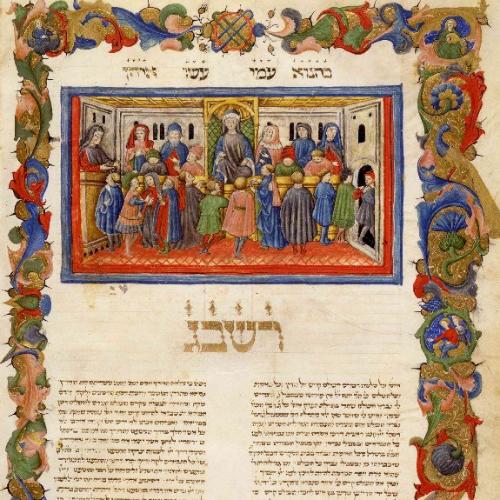
The Arba'ah Turim ("Four Rows"), or simply the Tur, was written by Rabbi Yaakov ben Asher of Toledo, son of the Rosh (Rabbi Asher ben Yehiel), who had fled Germany for Spain around 1305. The title recalls the four rows of stones on the High Priest's breastplate (Exodus 28:17). The code includes only laws that apply after the Temple's destruction. It sets them out in four parts: Orach Chaim (prayer, Shabbat and festivals), Yoreh De'ah (dietary laws, mourning and other ritual matters), Even HaEzer (marriage and divorce) and Choshen Mishpat (civil and criminal law).
For each law the Tur sets out the views of the major authorities, often deciding with his father. Printed at Piove di Sacco in 1475, it was one of the first dated Hebrew printed books. Its four-part structure became the framework of later Jewish law: Rabbi Yosef Karo wrote his Beit Yosef as a commentary on the Tur and then condensed it into the Shulchan Aruch, which keeps the same four divisions. Yaakov ben Asher is also known for his Torah commentary, the Ba'al HaTurim, rich in gematria.
- Hebrew year
- 5100 (ה׳ק׳)
- Place
- Toledo
- Category
- Books, scripts & languages
- Part of
- Mamluk Period
Read the text
- Tur, Orach Chaim 1 · Hebrew and English on Sefaria