Berlin Pedestal
−1390
Hebrew year: 2371 (ב׳שע״א)
Open on the interactive timeline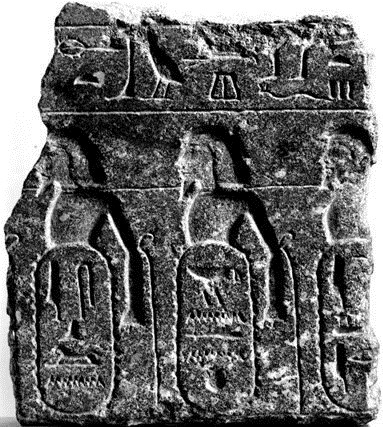
The Berlin pedestal (Egyptian Museum Berlin, ÄM 21687) is a grey granite fragment, about 46 by 40 cm, from the base of a statue, bought in 1913 by the Egyptologist Ludwig Borchardt from the antiquities dealer M. Nachman. Its relief shows three bound captives, each above a name ring naming a foreign land: Ashkelon, Canaan and a third, partly broken name. In 2001 Manfred Görg proposed reading it as an early spelling of Israel, and in 2010 he, Peter van der Veen and Christoffer Theis set out the case in a fuller study. The style and spellings point to the 18th dynasty, around the reigns of Amenhotep II or Amenhotep III, perhaps copied from an older list.
If the reading is right, it is the oldest known mention of Israel, some 150 to 200 years before Merneptah's stele of −1208, placing Israel as a people near Canaan in the 14th century, which would suit the early date of the Exodus kept on this timeline. James Hoffmeier, Robert Ritner and other Egyptologists reject the identification, reading the damaged signs differently, so it remains debated.
- Hebrew year
- 2371 (ב׳שע״א)
- Place
- Thebes (Luxor)
- Category
- Archaeology
- Part of
- Conquest & Judges