Julius Caesar (Rome)
−48 · until −44
Hebrew year: 3713 (ג׳תשי״ג)
Open on the interactive timeline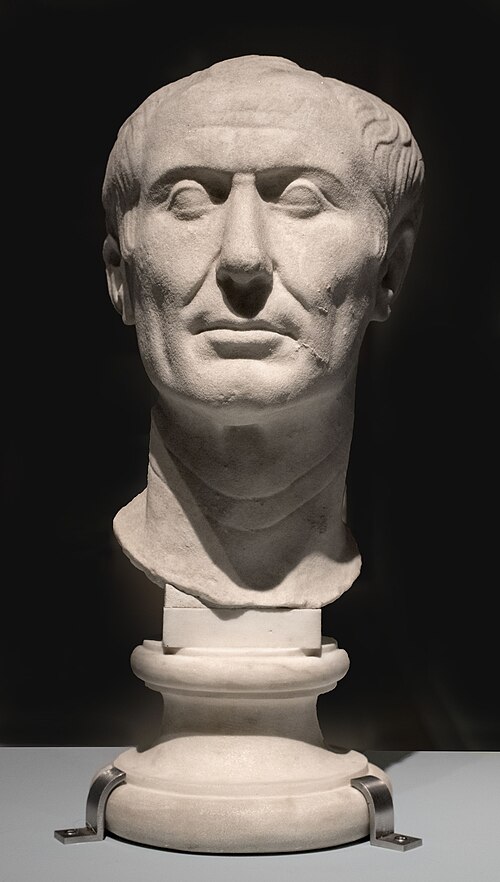
After defeating Pompey at Pharsalus in −48, Julius Caesar followed him to Egypt and was trapped in Alexandria. Antipater the Idumean, chief minister of the high priest Hyrcanus II, brought 3,000 Jewish soldiers to the relief army of Mithridates of Pergamum, fought at its head, and with a letter from Hyrcanus won over the Jews of Egypt to Caesar's side (Josephus, Antiquities 14.127–139). In −47 Caesar rewarded them: Hyrcanus was confirmed as high priest and ethnarch of the Jews, Antipater was made a Roman citizen and governor of Judea, Jerusalem was allowed to rebuild the walls Pompey had torn down, Jaffa was returned and no tribute was taken in the sabbatical year.
Caesar's decrees, quoted by Josephus (Antiquities 14.190–216), also let the Jews of the Diaspora gather, keep their laws and send money to the Temple, and became the basis of Jewish rights in Roman cities for generations. The Roman historian Suetonius writes that when Caesar was murdered in −44, the Jews above all mourned him, coming night after night to the place of his pyre. His grant also launched the house of Antipater, whose son Herod would rule Judea.
- Hebrew year
- 3713 (ג׳תשי״ג)
- Place
- Rome
- Category
- Foreign rulers & empires
- Part of
- Roman Rule