Parthian Invasion of Judea
−40
Hebrew year: 3721 (ג׳תשכ״א)
Open on the interactive timeline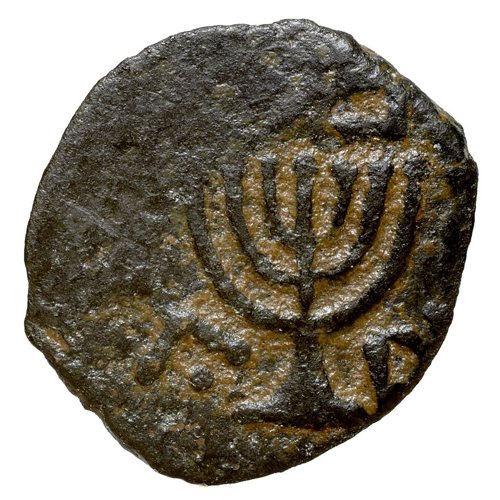
In −40 a Parthian army under Pacorus, son of King Orodes II, and the satrap Barzapharnes overran Roman Syria and entered Judea to support Antigonus II Mattathias, the last Hasmonean claimant, who according to Josephus promised them 1,000 talents and 500 women (Antiquities 14; War 1). The Parthians seized the high priest Hyrcanus II and Herod's brother Phasael by treachery. Antigonus mutilated Hyrcanus's ears so he could never again serve as high priest, and Phasael took his own life in captivity. Herod escaped by night to Masada with his family, then went by way of Petra and Alexandria to Rome, where the Senate named him king of Judea.
Antigonus reigned for three years as king and high priest, the last Hasmonean ruler. His bronze coins carry the earliest known image of the Temple menorah, with "Mattityahu the High Priest" in Hebrew and "King Antigonus" in Greek; Israel's 10-agorot coin reproduces it. In −37 Herod and the Roman general Sosius took Jerusalem after a siege, and Antigonus was beheaded at Antioch on Mark Antony's order, ending Hasmonean rule.
- Hebrew year
- 3721 (ג׳תשכ״א)
- Place
- Jerusalem
- Category
- Wars & battles
- Part of
- Roman Rule
At the same time
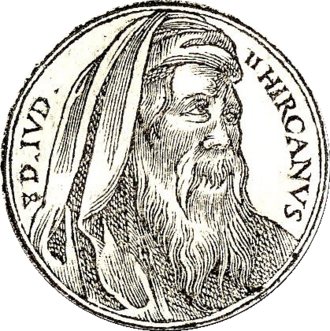 Hyrcanus II (High Priest & King)−67 – −40
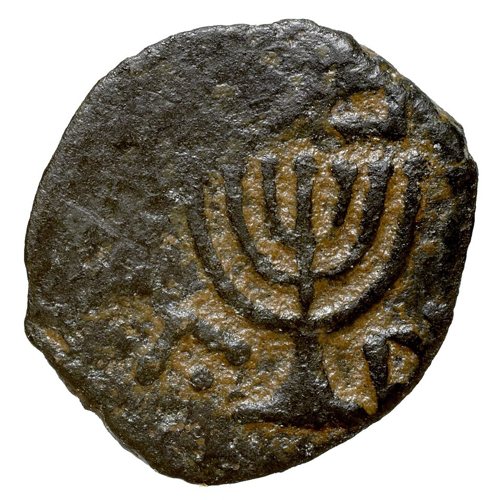 King Antigonus II (High Priest & King)−40 – −37
 Hillel the Elder−110 – 10
 Shemayah & Avtalyon−60 – −30
 Shammai the Elder−50 – 30