Mesha (Moab)
−850 · until −830
Hebrew year: 2911 (ב׳תתקי״א)
Open on the interactive timeline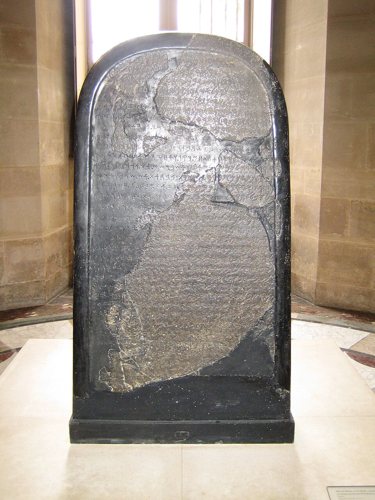
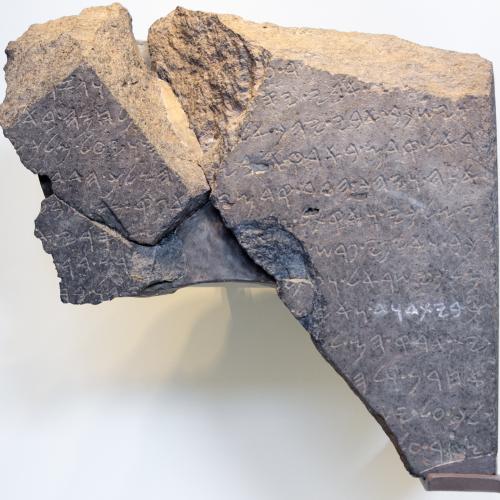
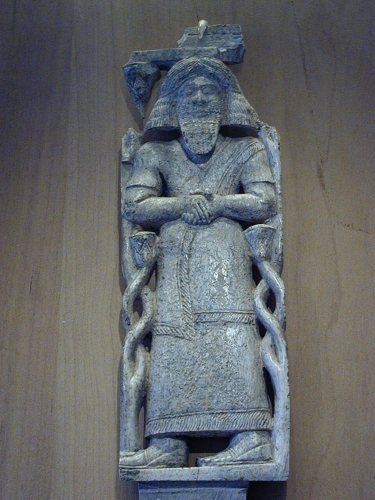
Mesha was king of Moab, east of the Dead Sea, ruling from Dibon. According to 2 Kings 3, he was a sheep breeder who paid Israel a tribute of 100,000 lambs and the wool of 100,000 rams, and rebelled after Ahab's death. Jehoram of Israel, Jehoshaphat of Judah and the king of Edom invaded and besieged him in Kir-hareseth, until Mesha sacrificed his firstborn son on the city wall and the invaders withdrew.
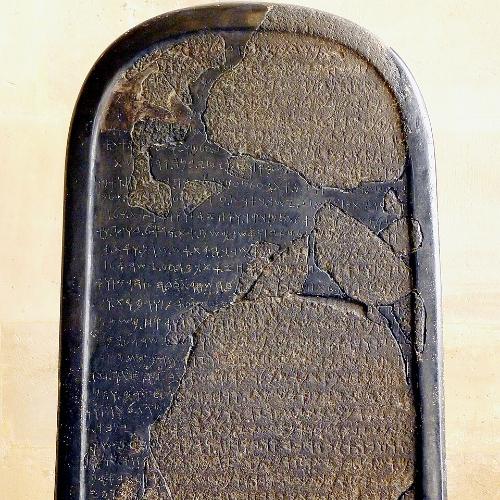
Mesha told his own side of the story on the Mesha Stele, or Moabite Stone, a black basalt inscription of 34 lines found at Dhiban in 1868. Shattered by local villagers soon after, it was reconstructed with the help of a paper squeeze made for Charles Clermont-Ganneau and is now in the Louvre. Mesha writes that "Omri king of Israel" had oppressed Moab because the god Chemosh was angry with his land, boasts that "Israel has perished forever," and says he captured Nebo and dragged "the vessels of YHWH" before Chemosh. It is the earliest known mention of the God of Israel by name outside the Bible, and one of the longest Iron Age inscriptions from the region.
- Hebrew year
- 2911 (ב׳תתקי״א)
- Place
- Dibon
- Category
- Foreign rulers & empires
- Part of
- Israel & Judah
At the same time
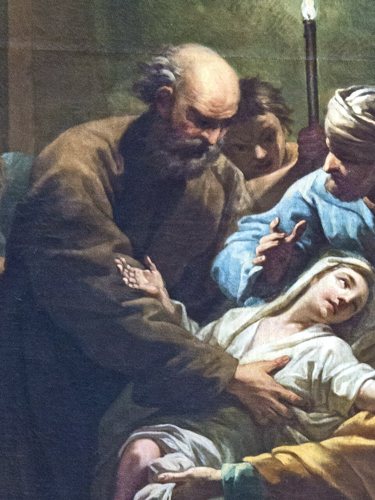 Prophet Elisha (Israel)−850 – −795
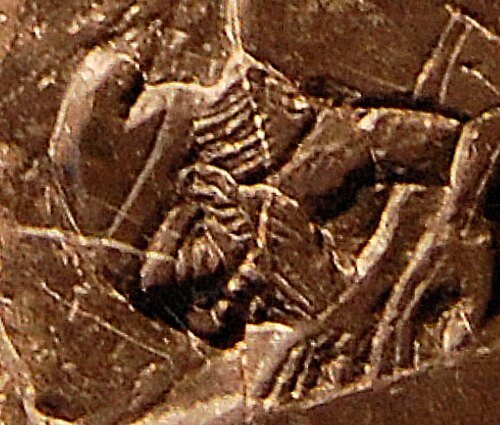 King Jehu (Israel)−841 – −814
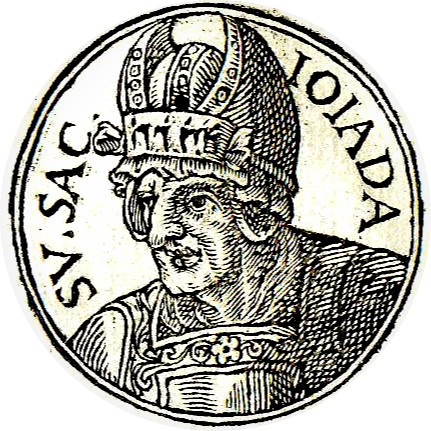 Jehoiada (High Priest)−841 – −810
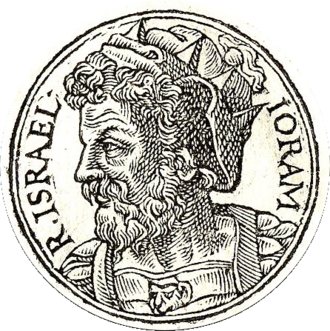 King Jehoram (Israel)−852 – −841
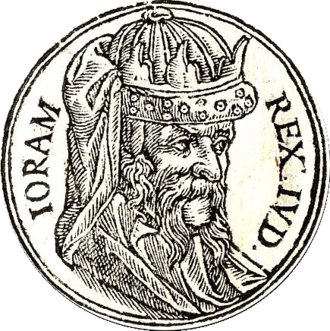 King Jehoram (Judah)−848 – −841
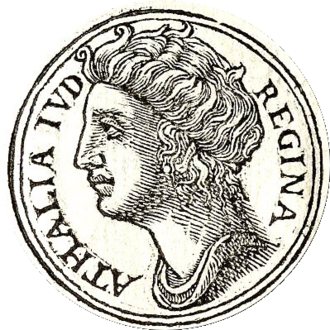 Queen Athaliah (Judah)−841 – −835
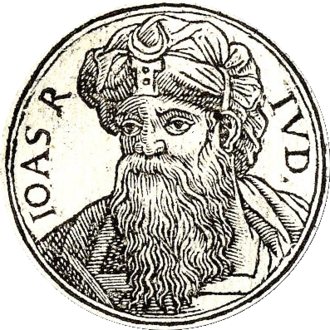 King Joash (Judah)−835 – −795
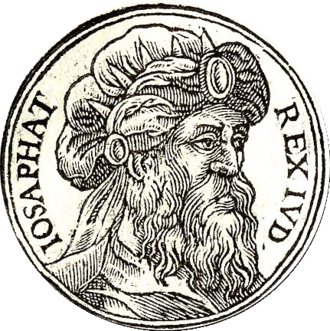 King Jehoshaphat (Judah)−870 – −848
 King Ahaziah (Judah)−841
 Prophet Elijah (Israel)−870 – −850