Nash Papyrus
−150
Hebrew year: 3611 (ג׳תרי״א)
Open on the interactive timeline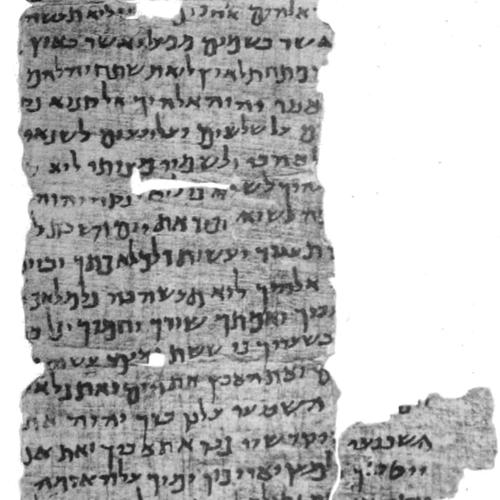
A small Egyptian papyrus containing the Ten Commandments followed by the Shema, apparently a liturgical or devotional sheet rather than a scroll. Before the Dead Sea discoveries it was by far the oldest known Hebrew biblical manuscript, and its dating was disputed by centuries. Its text follows an order and wording closer to the Septuagint than to the Masoretic tradition in places. When the first scrolls surfaced in 1947, it was the Nash Papyrus that gave scholars the paleographic basis for accepting their antiquity.
- Hebrew year
- 3611 (ג׳תרי״א)
- Place
- Fayum
- Category
- Books, scripts & languages
- Part of
- Hellenistic Period
Read the text
- Deuteronomy 6:4–9 · Hebrew and English on Sefaria
At the same time
 Jonathan Apphus (High Priest)−160 – −142
- Yose ben Yoezer & Yose ben Yochanan−200 – −150
 Yehoshua ben Perachyah & Nittai of Arbela−150 – −100