Neo-Assyrian Empire
−911
Hebrew year: 2850 (ב׳תת״נ)
Open on the interactive timeline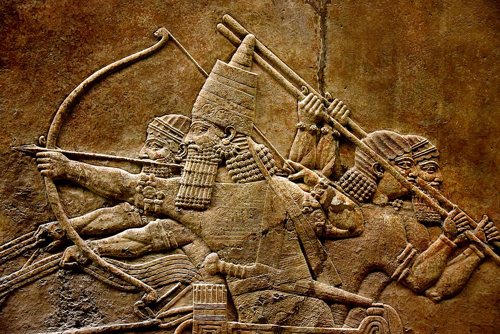
The Neo-Assyrian Empire became the dominant military power of the ancient Near East, expanding from Mesopotamia across Syria and the Levant. Its kings developed a highly centralized empire supported by professional armies, siege warfare, mass deportations, and a network of provincial governors and tributary kingdoms. Assyrian expansion had a major impact on the kingdoms of Israel and Judah: after years of conflict and rebellion, Assyria conquered Samaria in −722, bringing the northern Kingdom of Israel to an end and deporting part of its population. Judah survived, but for much of the following century remained under heavy Assyrian pressure and tribute. The empire eventually collapsed in the late 7th century before the common count, with Nineveh falling in −612.
- Hebrew year
- 2850 (ב׳תת״נ)
- Place
- Nineveh
- Category
- Major events
- Part of
- Israel & Judah