Temple of Onias
−160
Hebrew year: 3601 (ג׳תר״א)
Open on the interactive timeline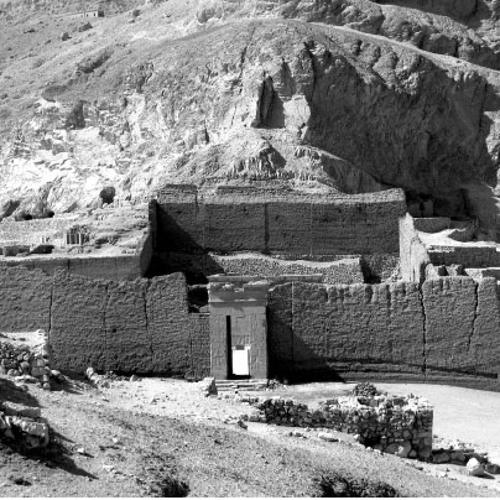
Around −160 Onias IV, son of the murdered high priest Onias III and heir of the Zadokite line, fled to Egypt after the high priesthood passed to men outside his family. According to Josephus (Antiquities 13.62–73), Ptolemy VI Philometor and Cleopatra II gave him a ruined temple site at Leontopolis, in the district of Heliopolis, where he built a Jewish temple, citing Isaiah 19:19: "In that day there shall be an altar to the Lord in the midst of the land of Egypt." The surrounding "Land of Onias" became a Jewish military colony.
Priests offered sacrifices there for more than two centuries. The Mishnah (Menachot 13:10) treats the "House of Onias" as a lesser shrine: offerings vowed for Jerusalem could not be brought there, and its priests could not serve in the Jerusalem Temple. Around 73, after the Great Revolt, Vespasian ordered it closed, fearing it would become a new rallying point (War 7.420–436). The site is identified with Tell el-Yahudiya, "mound of the Jews," excavated by Flinders Petrie in 1905–1906.
- Hebrew year
- 3601 (ג׳תר״א)
- Place
- Leontopolis
- Category
- Archaeology
- Part of
- Hellenistic Period
At the same time
 Judah Maccabee (Commander)−190 – −160
 Jonathan Apphus (High Priest)−160 – −142
- Yose ben Yoezer & Yose ben Yochanan−200 – −150