Christianization of the Roman Empire
313
Hebrew year: 4073 (ד׳ע״ג)
Open on the interactive timeline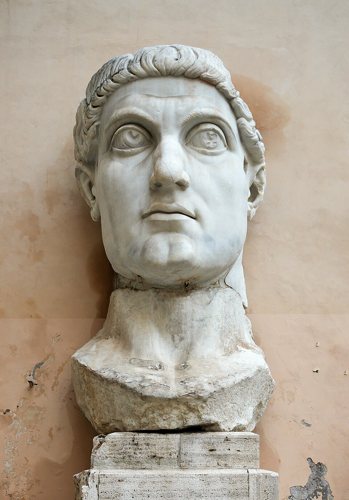
In 313 the emperors Constantine and Licinius agreed, in the so-called Edict of Milan, to tolerate Christianity, ending the persecutions. Constantine then gave the Church money, privileges and buildings, and the Council of Nicaea, which he convened in 325, decided that Easter would be calculated independently of the Jewish Passover. In 380 Theodosius I's Edict of Thessalonica made Nicene Christianity the official faith of the empire, and pagan sacrifices were banned soon after.
For the Jews this meant a steady loss of status. Imperial laws, later collected in the Theodosian Code of 438, punished Jews who harassed converts to Christianity, restricted Jewish ownership of Christian slaves, banned marriage between Jews and Christians, and finally forbade building new synagogues. The Land of Israel became the Christian "Holy Land," filled with churches and pilgrims, while Jews could enter Jerusalem only to mourn on the 9th of Av. A brief reversal came under Emperor Julian, who in 363 began to rebuild the Temple, until fires broke out at the site and he was killed fighting Persia (Ammianus Marcellinus 23.1).
- Hebrew year
- 4073 (ד׳ע״ג)
- Place
- Rome
- Category
- Major events
- Part of
- Roman Rule