Constantine the Great (Byzantine)
326 · until 337
Hebrew year: 4086 (ד׳פ״ו)
Open on the interactive timeline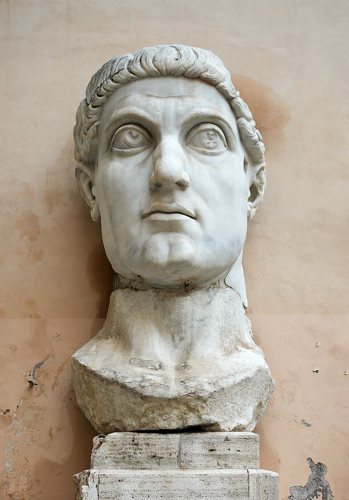
Constantine became master of the western empire after his victory at the Milvian Bridge in 312, which he credited to the Christian God, and sole emperor in 324. He legalized Christianity in 313, convened the Council of Nicaea in 325, and in 330 dedicated his new capital, Constantinople, on the site of Byzantium, the city that gave the later Byzantine Empire its name. Around 326 his mother Helena toured the Holy Land, and Constantine had Hadrian's temple in Jerusalem torn down to build the Church of the Holy Sepulchre, dedicated in 335 (Eusebius, Life of Constantine 3.25–40); churches also rose in Bethlehem and on the Mount of Olives.
Jerusalem, a minor Roman town called Aelia Capitolina since Hadrian, became the center of Christian pilgrimage. For Jews the change was ominous: Constantine's laws called Judaism a "nefarious sect," punished Jews who harassed converts to Christianity or circumcised their slaves, and kept the ban on Jews living in Jerusalem. The Bordeaux Pilgrim of 333 describes Jews coming once a year to a "pierced stone" on the Temple Mount to anoint it, mourn and tear their garments.
- Hebrew year
- 4086 (ד׳פ״ו)
- Place
- Constantinople
- Category
- Foreign rulers & empires
- Part of
- Byzantine Period