Justinian I (Byzantine)
527 · until 565
Hebrew year: 4287 (ד׳רפ״ז)
Open on the interactive timeline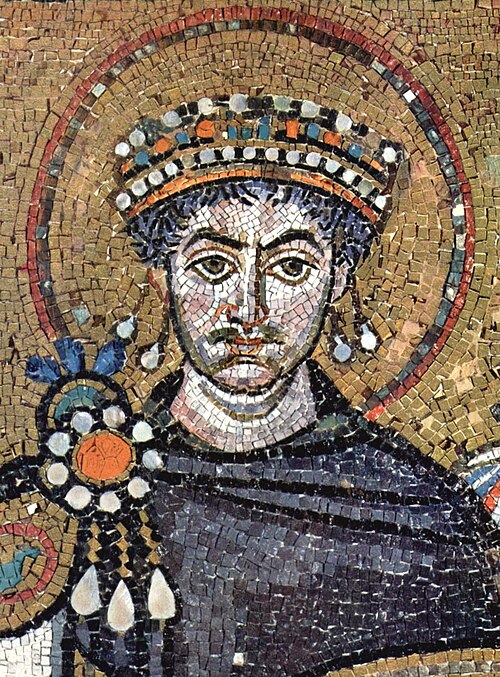
Justinian I, emperor in Constantinople from 527 to 565, reconquered North Africa and Italy and gathered Roman law into the Corpus Juris Civilis (529–534). His code repeated and sharpened the earlier laws against Jews: they could not hold public office or honours, own Christian slaves, testify against Christians or build new synagogues. In Novella 37 (535) he ordered the synagogues of reconquered Africa turned into churches. In Novella 146 (553) he stepped into the synagogue itself: the Torah could be read in Greek or another language, preferably in the Septuagint or Aquila's translation, but the deuterosis, the rabbinic oral teaching, was forbidden, and those who denied the resurrection, the judgment or the angels were to be punished.
He crushed the Samaritan revolts of 529 and 556, and in Italy the Jews of Naples fought beside the Goths against his general Belisarius in 536 (Procopius). His law books shaped the legal standing of Jews in Christian Europe for centuries. Some scholars connect his ban on rabbinic teaching in the synagogue with the rise of liturgical poetry, the piyyut, which carried that teaching into the prayers.
- Hebrew year
- 4287 (ד׳רפ״ז)
- Place
- Constantinople
- Category
- Foreign rulers & empires
- Part of
- Byzantine Period