Ladino Emerges
Mar 1200
Hebrew year: 4960 (ד׳תתק״ס)
Open on the interactive timeline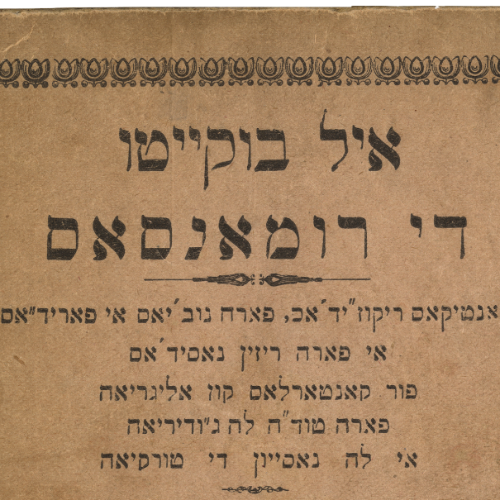
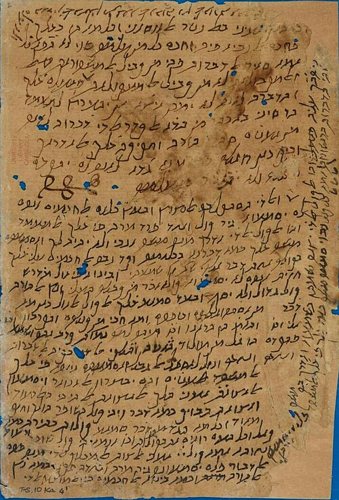
Judeo-Spanish, called Judezmo by its speakers and widely known as Ladino, grew from the Castilian and other Iberian dialects spoken by Jews in medieval Spain. In the strict sense, "Ladino" means the word-for-word translation language of sacred texts, such as the Ferrara Bible of 1553. After the expulsions of 1492 and 1497 the exiles carried their Spanish to the Ottoman Empire and North Africa. There it kept old forms that Spain itself later lost, and it took in Hebrew, Turkish, Greek, Arabic, French and Italian words. It was written mainly in Hebrew letters (Rashi script and the cursive solitreo).
Salonica, Istanbul, Izmir, Sarajevo and Sofia became its great centers. In Morocco a related form, Haketia, developed. Its classic is Me'am Lo'ez, a popular encyclopedia of the Bible begun by Rabbi Yaakov Culi in Constantinople in 1730. Romances, coplas and lullabies survive in oral tradition. The Holocaust destroyed Salonica's community in 1943, and Israel established a National Authority for Ladino in 1996 to preserve the language.
- Hebrew year
- 4960 (ד׳תתק״ס)
- Category
- Books, scripts & languages
- Part of
- Crusaders & Ayyubids