Merneptah Stele
−1208
Hebrew year: 2553 (ב׳תקנ״ג)
Open on the interactive timeline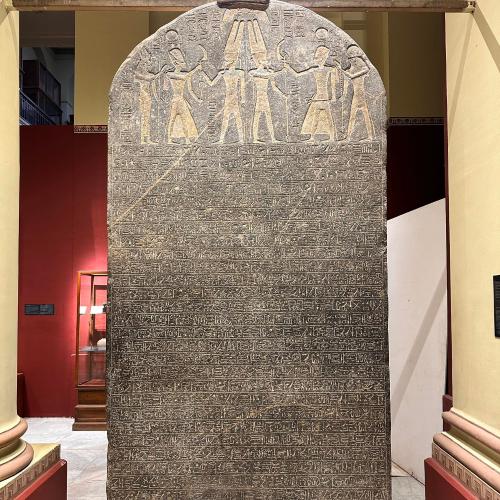
The Merneptah Stele is an Egyptian victory inscription from Pharaoh Merneptah, dated to around −1208. Near the end of the inscription, Merneptah lists defeated enemies in Canaan and writes: “Canaan is plundered with every evil; Ashkelon is carried off; Gezer is seized; Yanoam is made nonexistent; Israel is laid waste, his seed is not.” The inscription is important because it is the earliest known non-biblical reference to Israel. In the hieroglyphs, cities such as Ashkelon, Gezer, and Yanoam are written with determinatives marking them as settled city-states, while Israel is written with a determinative for a foreign people/group, not a city. This suggests that by the late 13th century before the common count, Israel was known to Egypt as a people living in Canaan, likely without a centralized kingdom or capital city yet.
- Hebrew year
- 2553 (ב׳תקנ״ג)
- Place
- Thebes (Luxor)
- Category
- Archaeology
- Part of
- Conquest & Judges