Mount Ebal Altar
−1220
Hebrew year: 2541 (ב׳תקמ״א)
Open on the interactive timeline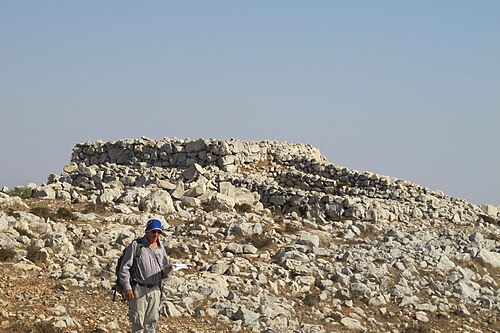
In 1980 a survey team led by Adam Zertal of the University of Haifa found a stone structure on the north-eastern slope of Mount Ebal, above Shechem, and excavated it until 1989. At its centre stands a rectangular stone platform about 9 by 7 metres, filled with layers of ash, stones and burnt bones of young male sheep, goats and cattle and of fallow deer, with a ramp; scarabs and pottery date it to the 13th and 12th centuries. Zertal identified it as the altar Joshua built on Mount Ebal (Joshua 8:30–35, following Deuteronomy 27); others see a farmhouse or a watchtower. In 2019 a team led by Scott Stripling wet-sifted Zertal's spoil heaps, and in 2022 announced a folded lead tablet about 2 cm square, which they read as a curse text naming the God YHW.
If that reading held, the tablet would be the oldest known Hebrew text with the divine name, from the time of the conquest. Many epigraphers say no letters can be seen on the published scans, and the 2023 article on it has been sharply criticised; both the altar and the tablet remain debated.
- Hebrew year
- 2541 (ב׳תקמ״א)
- Place
- Mount Ebal
- Category
- Archaeology
- Part of
- Conquest & Judges
Read the text
- Joshua 8:30–35 · Hebrew and English on Sefaria
- Deuteronomy 27 · Hebrew and English on Sefaria