Nuremberg Laws
15 Sep 1935
Hebrew year: 5695 (ה׳תרצ״ה)
Open on the interactive timeline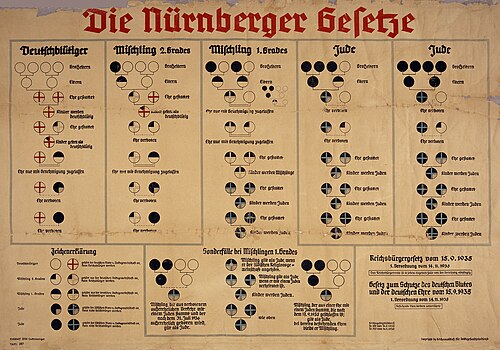
On 15 September 1935 the Reichstag, summoned to Nuremberg during the annual Nazi Party rally, unanimously passed two laws that became known as the Nuremberg Laws. The Reich Citizenship Law made only people of "German or related blood" citizens, turning German Jews into subjects without political rights. The Law for the Protection of German Blood and German Honour forbade marriages and sexual relations between Jews and other Germans and barred Jews from employing German women under 45 in their households. A decree of 14 November 1935 defined a Jew by descent: anyone with three or four Jewish grandparents, with lesser categories for those of "mixed blood". The laws were soon applied to Roma and Black people as well.
The Nuremberg Laws gave legal form to Nazi racial antisemitism. They stripped some half a million German Jews of equality won in the 19th century, set the definitions later used for deportation and murder across occupied Europe, and marked a decisive step on the road to the Shoah.
- Hebrew year
- 5695 (ה׳תרצ״ה)
- Place
- Nuremberg
- Category
- Persecution & antisemitism
- Part of
- British Mandate
At the same time
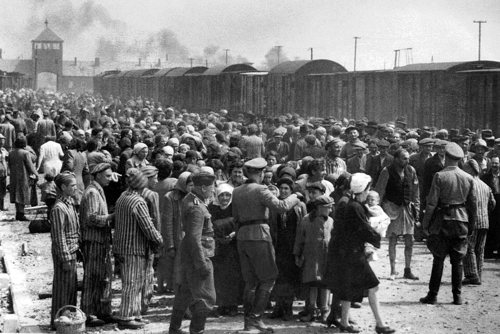 Holocaust - Shoah21 Jun 1933 – 27 Jan 1945
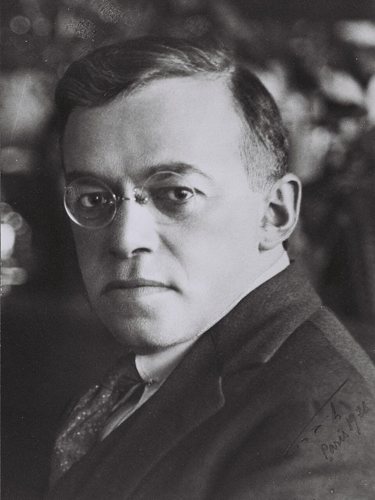 Ze’ev Jabotinsky1880 – 1940
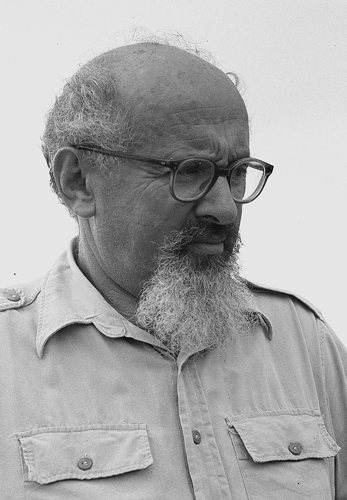 Yitzhak Sadeh1890 – 1952
 Moshe Dayan1915 – 1981
 Yigael Yadin1917 – 1984
 Henrietta Szold1860 – 1945
 Chaim Weizmann1874 – 1952
 Chazon Ish1878 – 1953
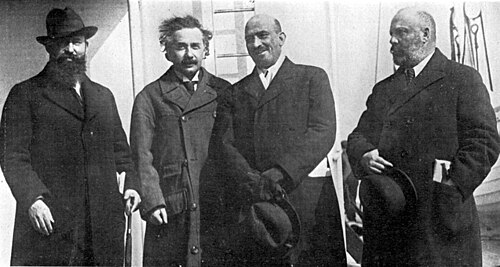 Albert Einstein1879 – 1955
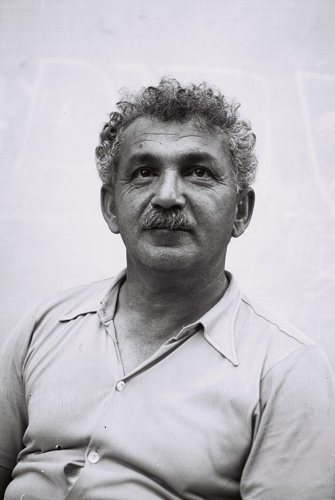 Berl Katznelson1887 – 1944