Prophet Zechariah (Return Era)
−520 – −480
Hebrew years: 3408–3281 (ג׳ת״ח–ג׳רפ״א)
Open on the interactive timeline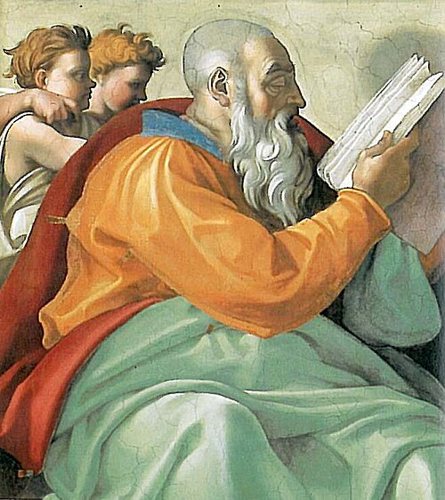
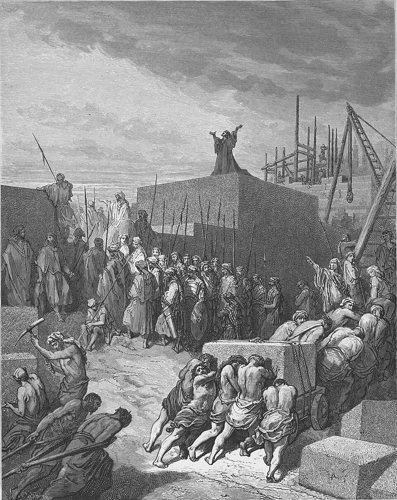
Zechariah son of Berechiah son of Iddo, from a priestly family that returned from Babylon, began prophesying in −520, two months after Haggai, and joined him in urging the rebuilding of the Temple. His book opens with eight night visions, among them horsemen among the myrtles, a man measuring Jerusalem, the high priest Joshua in filthy garments accused by "the satan" and called "a brand plucked from the fire," and a golden menorah between two olive trees with the message "Not by might, nor by power, but by my spirit" (4:6). Asked whether the fasts mourning Jerusalem's destruction should go on, he promised that the fasts of the fourth, fifth, seventh and tenth months would become "joy and gladness" (8:19), and that old men and women would again sit in Jerusalem's streets with children playing around them.
Later chapters picture a humble king "riding on a donkey" (9:9) and end with "On that day the Lord shall be one and his name one" (14:9), the closing line of the Aleinu prayer. The menorah and olive branches of Israel's state emblem draw on his vision, which is also the haftarah for the Sabbath of Hanukkah. Many scholars attribute chapters 9–14 to a later hand.
- Hebrew years
- 3408–3281 (ג׳ת״ח–ג׳רפ״א)
- Place
- Jerusalem
- Category
- Prophets of Judah
- Part of
- Persian Period
Read the text
- Zechariah 1 · Hebrew and English on Sefaria
At the same time
 Book of Daniel (Exile)−605 – −503
 Governor Zerubbabel−538 – −510
 Prophet Haggai (Return Era)−520 – −515
 Joshua (High Priest)−538 – −516
 Mordecai−483 – −465