Ribosome Structure
2000
Hebrew year: 5760 (ה׳תש״ס)
Open on the interactive timeline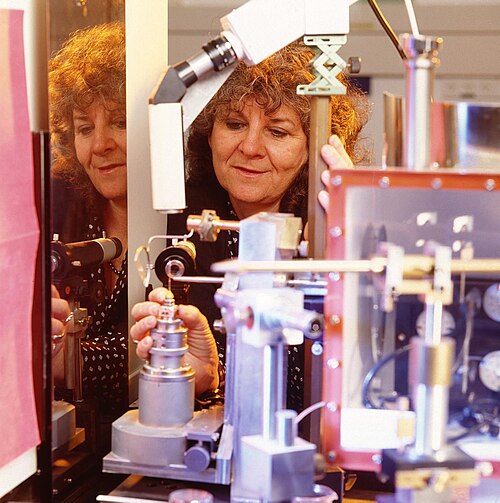
In 2000 and 2001 Ada Yonath and her teams at the Weizmann Institute of Science in Rehovot and at a Max Planck research unit in Hamburg published complete high-resolution structures of both subunits of the ribosome, the machine in every living cell that reads the genetic code and builds proteins. She had started around 1980, when most scientists thought the huge, flexible ribosome could never be crystallized. To make it hold still she chose ribosomes from bacteria that survive harsh conditions, among them one from the Dead Sea and one from hot springs, and she pioneered cryo-crystallography, freezing the crystals to protect them from X-ray damage, a method now routine in structural biology. Two decades of failures and doubt went into the result.
Her maps showed how more than twenty antibiotics bind to bacterial ribosomes and how bacteria resist them, opening the way to designing new drugs. In 2009 she shared the Nobel Prize in Chemistry with Venkatraman Ramakrishnan and Thomas Steitz, the first Israeli woman to win a Nobel Prize and the first woman to win it for chemistry since 1964. Born in Jerusalem in 1939, she died on 31 August 2026.
- Hebrew year
- 5760 (ה׳תש״ס)
- Place
- Rehovot
- Category
- Science & innovation
- Part of
- State of Israel