Shekel of Tyre
−126
Hebrew year: 3635 (ג׳תרל״ה)
Open on the interactive timeline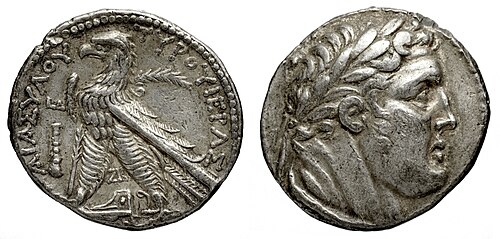
In −126 the city of Tyre won its freedom from the Seleucid kings and began to strike its own silver shekels (tetradrachms) and half-shekels, issued until the Great Revolt. They show the head of Melqart, the city's god, in the guise of Herakles, and on the other side an eagle with the Greek words "of Tyre, holy and inviolable", each coin dated by the city's own era. Their silver was unusually pure and steady in weight, and so the Sages required the yearly half-shekel for the Temple, and the other sums the Torah fixes, to be paid in this money: the Tosefta (Ketubot 13:3) says that the silver of which the Torah speaks is always Tyrian silver, and the Mishnah (Bekhorot 8:7) reckons the redemption of the firstborn in the Tyrian maneh.
This is why money changers set up their tables across the land and in the Temple every month of Adar (Mishnah Shekalim 1:3). Large hoards of these coins have been found in the Land of Israel, among them the Isfiya hoard on Mount Carmel (1960), some 4,500 silver pieces, almost all shekels and half-shekels of Tyre, perhaps Temple dues on their way to Jerusalem.
- Hebrew year
- 3635 (ג׳תרל״ה)
- Place
- Tyre
- Category
- Archaeology
- Part of
- Hasmonean Kingdom
Read the text
- Mishnah Shekalim 1:3 · Hebrew and English on Sefaria
- Mishnah Bekhorot 8:7 · Hebrew and English on Sefaria
- Tosefta Ketubot 12:14 (13:3) · Hebrew and English on Sefaria