The Wheel
−3500
Hebrew year: 261 (רס״א)
Open on the interactive timeline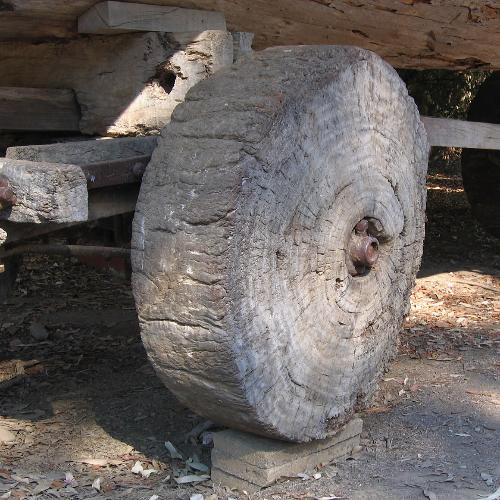
The earliest evidence of wheeled vehicles appears between about −3500 and −3000, almost at once across a wide area: pictographs of wheeled sledges on clay tablets from Uruk in southern Mesopotamia, a wagon drawn on a clay pot from Bronocice in Poland, wagon burials of the Maykop culture in the North Caucasus, and the Ljubljana Marshes Wheel in Slovenia, the oldest surviving wooden wheel. Because these finds are so close in date, it is still unknown which culture invented the wheeled vehicle.
At Ur, the Royal Cemetery excavated by Leonard Woolley in the 1920s preserved some of the clearest early images and remains. The Standard of Ur (around −2600) shows four-wheeled battle wagons pulled by equids trampling enemies, and several tombs held wagons buried with the animals that drew them. Lighter spoked wheels came much later, around −2000, and made the fast war chariot possible, the "chariots of Pharaoh" that the Bible sets in the sea at the Exodus (Exodus 14–15).
- Hebrew year
- 261 (רס״א)
- Place
- Ur
- Category
- Archaeology
- Part of
- Primeval History