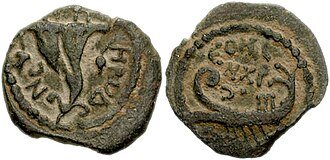
Tomb of Herod at Herodium
−4
Hebrew year: 3757 (ג׳תשנ״ז)
Open on the interactive timeline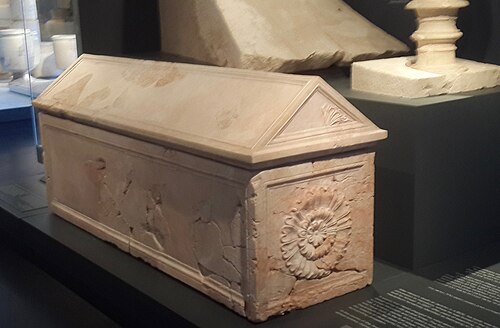
Herodium, the cone-shaped hill about 12 kilometres south of Jerusalem, is the only place Herod named after himself. He built it where he had beaten off his pursuers while fleeing the Parthian invasion of −40, and raised there a round fortress-palace with a town of pools and gardens below (Josephus, War 1.265 and 1.419–421). When he died in Jericho in −4, his body was carried in a great procession to Herodium and buried there (Antiquities 17.196–199). For centuries the grave was not found.
In 2007 the archaeologist Ehud Netzer of the Hebrew University, who had searched the site since 1972, announced that he had found the mausoleum on the hill's north-eastern slope: the base of a tall monument and the shattered pieces of a reddish limestone sarcophagus richly carved with rosettes, which he took to be Herod's, smashed in antiquity, perhaps by rebels of the Great Revolt who hated his memory. Netzer died in 2010 after a fall at the site; his team carried on, and the finds were shown at the Israel Museum in 2013. Some scholars still question whether the tomb is Herod's.
- Hebrew year
- 3757 (ג׳תשנ״ז)
- Place
- Herodium
- Category
- Archaeology
- Part of
- Roman Rule
At the same time
 King Herod the Great−37 – −4
 Herod Archelaus (Judea)−4 – 6
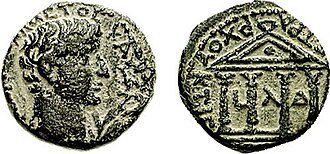 Philip the Tetrarch (northeast territories)−4 – 34
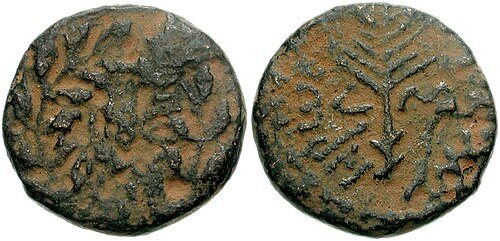 Herod Antipas (Galilee & Perea)−4 – 39
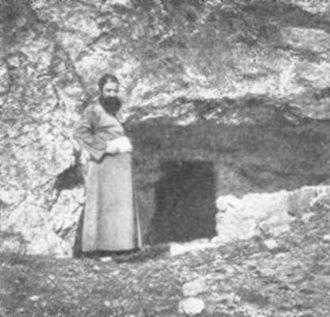 Hillel the Elder−110 – 10
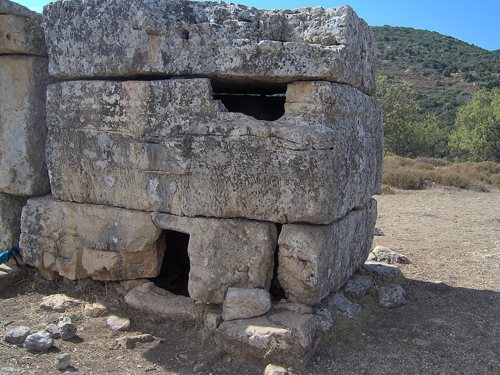 Shammai the Elder−50 – 30
 Rabban Gamliel HaZaken−10 – 50