Aaron (High Priest)
−1529 – −1406
Hebrew years: 2365–2487 (ב׳שס״ה–ב׳תפ״ז)
Open on the interactive timeline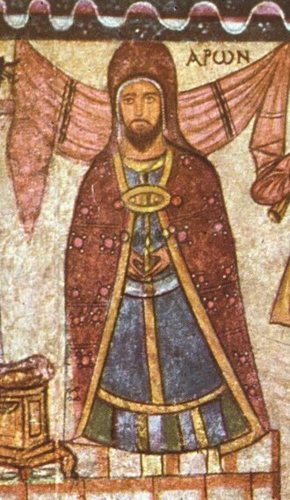
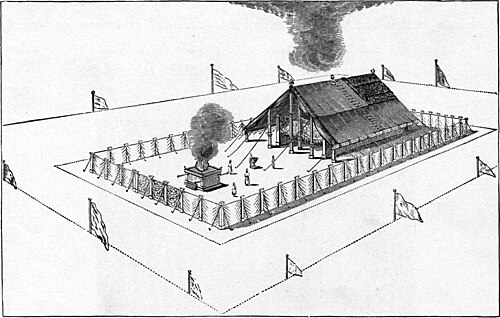
Aaron, three years older than Moses, was his spokesman before Pharaoh; the Bible tells that his staff became a serpent that swallowed the magicians' staffs, and that he struck the Nile to begin the plagues (Exodus 7–8). At Sinai, while Moses was on the mountain, he made the Golden Calf (Exodus 32). He and his sons Nadab, Abihu, Eleazar and Ithamar were consecrated as priests in the new Tabernacle, Aaron wearing the vestments of Exodus 28: the ephod, the breastplate with twelve stones for the tribes, the Urim and Thummim, and a gold plate inscribed "Holy to the LORD". After Korah's revolt his staff alone budded and bore almonds (Numbers 17). He died on Mount Hor at 123, in the fortieth year after the Exodus, and Israel mourned him thirty days.
Hillel taught, "Be among the disciples of Aaron, loving peace and pursuing peace" (Avot 1:12). His descendants, the Kohanim, still pronounce the Priestly Blessing given to him (Numbers 6:24–26), a text found on two tiny silver amulets from Ketef Hinnom in Jerusalem (around −600), the oldest surviving biblical verses.
- Hebrew years
- 2365–2487 (ב׳שס״ה–ב׳תפ״ז)
- Place
- Mount Sinai
- Category
- High Priests
- Part of
- Egypt & the Exodus
Read the text
- Exodus 28 · Hebrew and English on Sefaria
- Numbers 20:22–29 · Hebrew and English on Sefaria
At the same time
 Miriam−1536 – −1406
 Moses−1526 – −1406
 Slavery in Egypt−1560 – −1446
 Caleb−1485 – −1375
 Joshua Leadership−1406 – −1375
 Eleazar (High Priest)−1406 – −1370