Moses
−1526 – −1406
Hebrew years: 2368–2488 (ב׳שס״ח–ב׳תפ״ח)
Open on the interactive timeline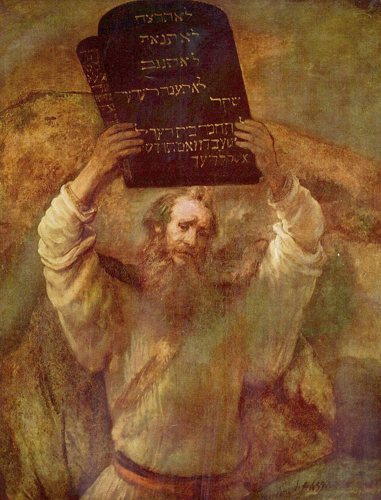
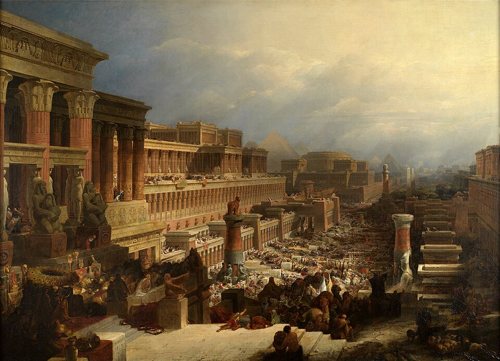
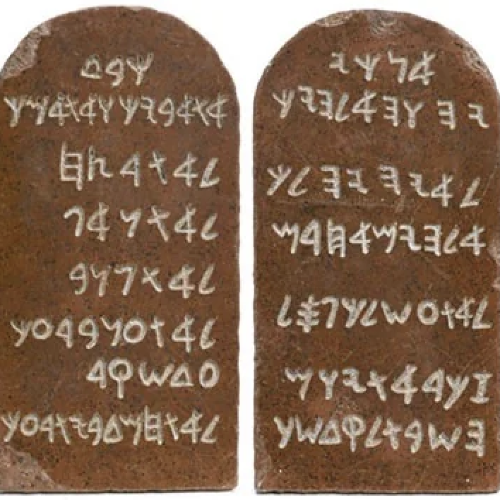
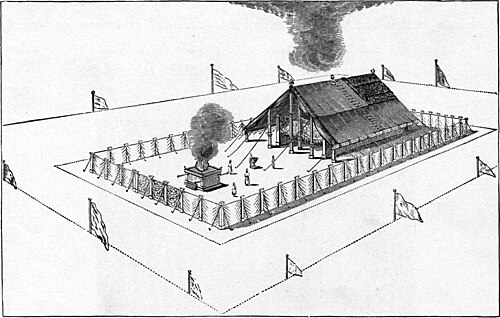
According to Exodus, Moses was born to Amram and Jochebed of the tribe of Levi while Pharaoh was drowning Hebrew baby boys; hidden in a basket on the Nile, he was found and raised by Pharaoh's daughter. After killing an Egyptian taskmaster he fled to Midian, married Zipporah, daughter of Jethro, and tended sheep until God spoke to him from the burning bush at Horeb (Exodus 3). At 80, with Aaron, he confronted Pharaoh through the ten plagues, from blood to the death of the firstborn, led Israel out at the first Passover and through the parted Sea of Reeds. In the wilderness came the manna, water from the rock and victory over Amalek; at Sinai he received the Ten Commandments, broke the tablets after the Golden Calf, and built the Tabernacle. Barred from entering the land after striking the rock at Meribah, he gave the speeches of Deuteronomy on the plains of Moab and died on Mount Nebo at 120, "his eye undimmed" (Deuteronomy 34:7), in an unknown grave.
Jews call him Moshe Rabbenu, "Moses our teacher"; the Torah is the "Torah of Moses", and Deuteronomy 34:10 says no prophet arose like him. Strikingly, the Passover Haggadah mentions him only once.
- Hebrew years
- 2368–2488 (ב׳שס״ח–ב׳תפ״ח)
- Place
- Mount Sinai
- Category
- Patriarchs & Biblical Figures
- Part of
- Egypt & the Exodus
Read the text
- Exodus 3 · Hebrew and English on Sefaria
- Deuteronomy 34 · Hebrew and English on Sefaria
At the same time
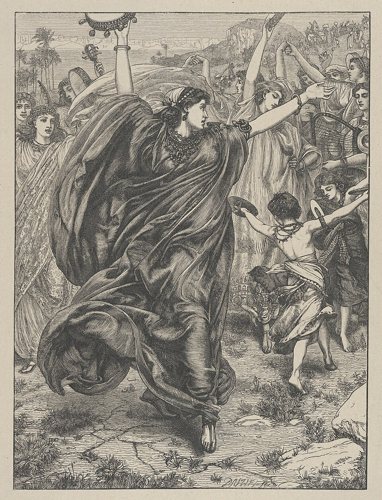 Miriam−1536 – −1406
 Aaron (High Priest)−1529 – −1406
 Slavery in Egypt−1560 – −1446
 Caleb−1485 – −1375
 Joshua Leadership−1406 – −1375
 Eleazar (High Priest)−1406 – −1370