Beit She'arim Necropolis
220
Hebrew year: 3980 (ג׳תתק״פ)
Open on the interactive timeline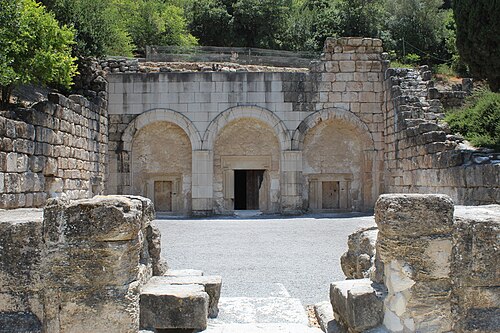
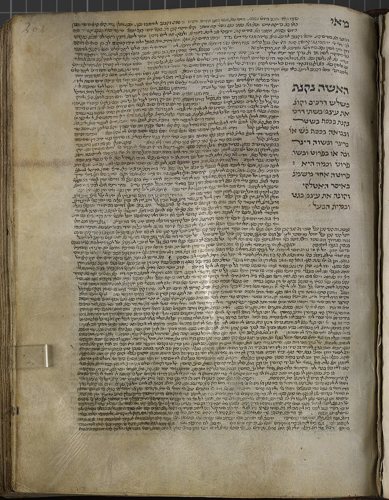
Beit She'arim, in the hills at the edge of the Jezreel Valley, was one of the seats of the Sanhedrin (Rosh Hashanah 31b) and the town where Rabbi Yehudah HaNasi taught. The Talmud says that when he lay ill in Tzippori a grave was ready for him at Beit She'arim, where he was buried around 220 (Ketubot 103b). Jews then wished to lie near him, and the town became the great Jewish burial ground of the land, used by families from Phoenicia, Palmyra, Mesopotamia and Himyar in South Arabia. More than thirty catacombs were cut into the soft limestone, with stone sarcophagi carved with menorahs, lions, eagles and even figures of Greek myth, and some 300 inscriptions, most in Greek, others in Hebrew, Aramaic and Palmyrene.
Found in 1936 by the watchman Alexander Zaïd, the caves were excavated by Benjamin Mazar and later Nahman Avigad. In one catacomb, graves are marked "Rabbi Shimon", "Rabbi Gamliel" and "Hanina", the names of Rabbi's sons and of a disciple in his last wishes. The town was burned around 352. In 2015 UNESCO listed the necropolis as a World Heritage Site, "a landmark of Jewish renewal".
- Hebrew year
- 3980 (ג׳תתק״פ)
- Place
- Beit She'arim
- Category
- Archaeology
- Part of
- Roman Rule
Read the text
- Ketubot 103b · Hebrew and English on Sefaria
- Rosh Hashanah 31b · Hebrew and English on Sefaria
At the same time
 Mar Shmuel165 – 254
- Rav / Abba Arika175 – 247
- Rabbi Yochanan bar Nafcha180 – 279
- Resh Lakish200 – 275
- Rav Huna216 – 297