Boaz
−1200 – −1118
Hebrew years: 2712–2792 (ב׳תשי״ב–ב׳תשצ״ב)
Open on the interactive timeline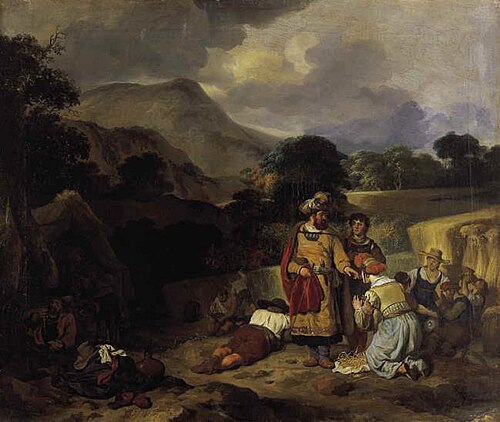
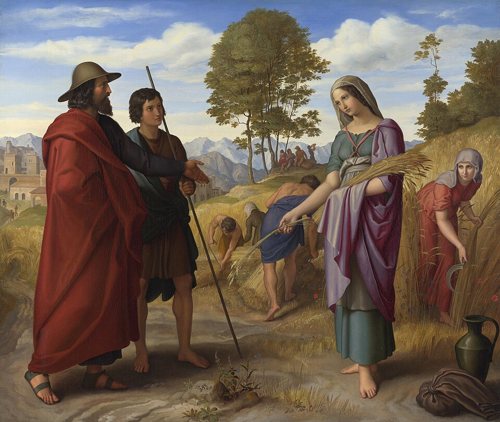
The Book of Ruth tells that Boaz, a wealthy landowner of Bethlehem and a kinsman of Naomi's late husband Elimelech, noticed the Moabite widow Ruth gleaning in his barley field. He told his reapers to let her glean among the sheaves and to drop extra stalks for her, and blessed her for her loyalty to Naomi: "May the Lord, the God of Israel, under whose wings you have come to take refuge, reward you" (Ruth 2). At the town gate, before ten elders, a closer relative declined to redeem Elimelech's field and marry Ruth and took off his sandal to seal the transfer, and Boaz took both (Ruth 4). Their son Obed was the father of Jesse, the father of King David.
The Talmud (Bava Batra 91a) identifies Boaz with Ibzan of Bethlehem, who judged Israel for seven years (Judges 12:8–10). The Midrash says he was 80 when he married Ruth (Ruth Rabbah; Ruth Zuta) and that he died soon after the wedding. The Book of Ruth is read on Shavuot, and Boaz stands for kindness to the stranger.
- Hebrew years
- 2712–2792 (ב׳תשי״ב–ב׳תשצ״ב)
- Place
- Bethlehem
- Category
- Patriarchs & Biblical Figures
- Part of
- Conquest & Judges
Read the text
At the same time
 Judge Jair−1189 – −1167
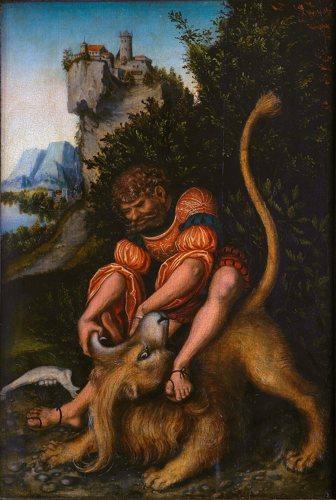 Judge Samson−1136 – −1116
 Judge Tola−1212 – −1189
 Judge Elon−1154 – −1144
- Judge Abdon−1144 – −1136
 Judge Ibzan−1161 – −1154
 Judge Jephthah−1167 – −1161
 Book of Ruth−1120 – −1080
 Prophetess Hannah−1120 – −1040