Hatikvah
1878
Hebrew year: 5638 (ה׳תרל״ח)
Open on the interactive timeline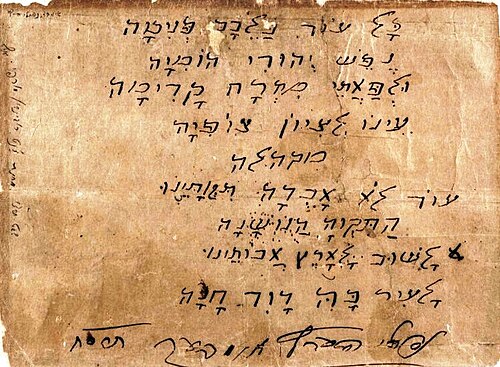
Naftali Herz Imber, a Hebrew poet from Złoczów in Galicia, wrote the poem Tikvatenu ("Our Hope") around 1877–78 while staying in Iași, Romania. It was first printed in his collection Barkai in Jerusalem in 1886. In 1888 Samuel Cohen, a settler in Rishon LeZion, set its first stanza and refrain to a melody adapted from the Romanian folk song "Carul cu boi", and it spread through the moshavot and then the Zionist movement. It was sung at the Zionist Congresses and adopted as the movement's anthem at the Eighteenth Congress in 1933. The original refrain spoke of returning "to the land of our fathers, the city where David camped"; the version sung today says "to be a free people in our land, the land of Zion and Jerusalem".
Survivors sang it in Bergen-Belsen days after the liberation in April 1945, and it closed the ceremony declaring the State of Israel on 14 May 1948. The Knesset made it the official national anthem by law in 2004.
- Hebrew year
- 5638 (ה׳תרל״ח)
- Place
- Iași
- Category
- Books, scripts & languages
- Part of
- Ottoman Period
At the same time
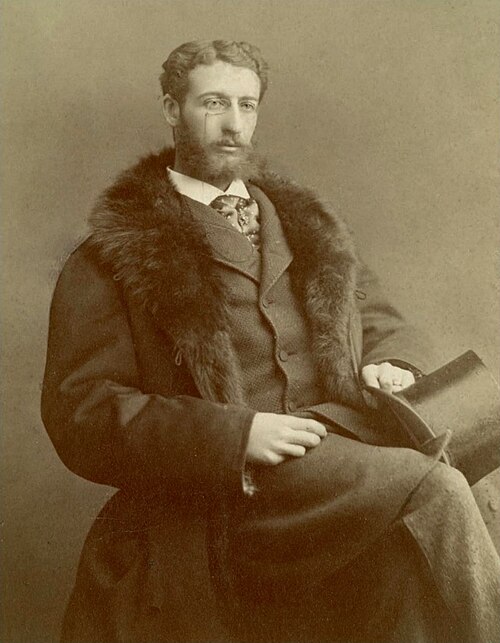 Baron Edmond de Rothschild1845 – 1934
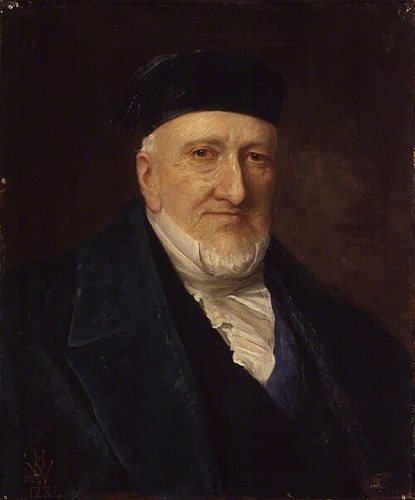 Moses Montefiore1784 – 1885
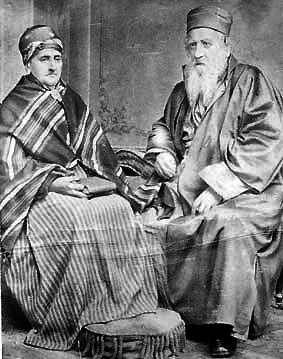 Rabbi Yehuda Alkalai1798 – 1878
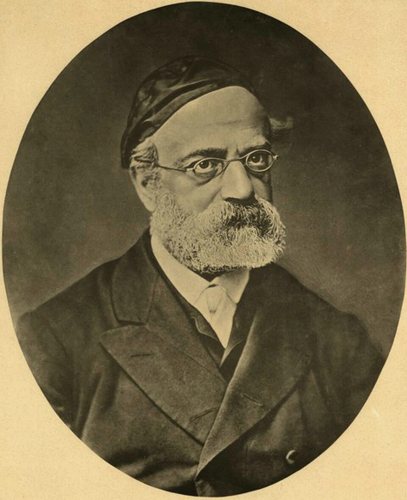 Samson Raphael Hirsch1808 – 1888
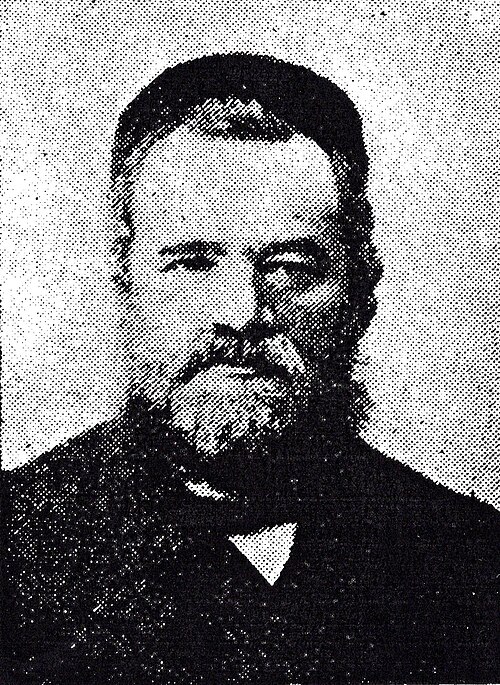 Rabbi Israel Salanter1809 – 1883
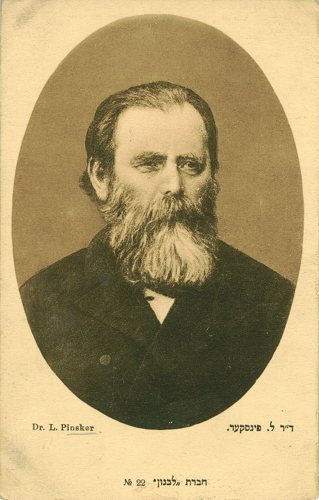 Leon Pinsker1821 – 1891
 (Chafetz Chaim) Rabbi Yisrael Meir Kagan1838 – 1933
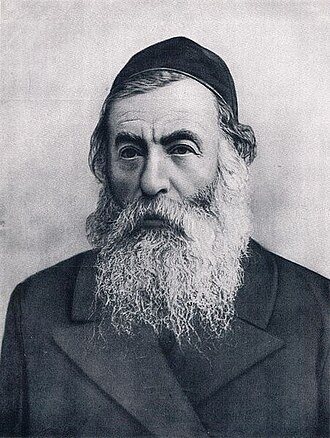 Rabbi Yitzchak Yaakov Reines1839 – 1915
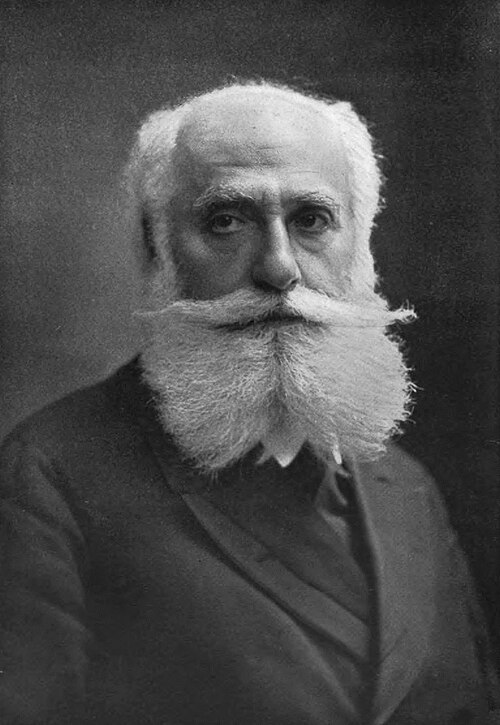 Max Nordau1849 – 1923
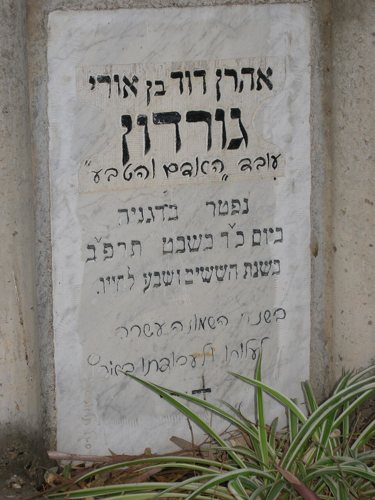 A. D. Gordon1856 – 1922