HMAC Cryptography
1996
Hebrew year: 5756 (ה׳תשנ״ו)
Open on the interactive timeline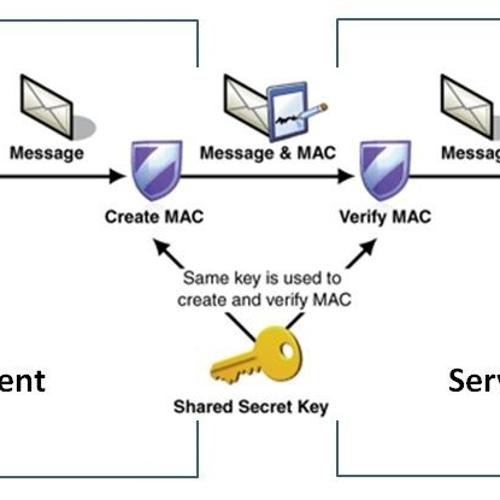
HMAC (Hash-based Message Authentication Code) was published in 1996 by the Israeli cryptographers Hugo Krawczyk, then at IBM, and Ran Canetti, together with Mihir Bellare. It combines a secret key with a standard hash function such as SHA-256, hashing twice with two keys derived from the secret, so that anyone holding the key can confirm that a message came from its sender and was not altered. Its security proofs rely only on mild properties of the hash, so it held up even after collisions were found in MD5 and SHA-1.
Issued in 1997 as the Internet standard RFC 2104 and adopted by the US government as FIPS 198, HMAC is used in TLS, which secures web connections, in IPsec virtual private networks and SSH, in API authentication and web tokens, and in the one-time codes of authenticator apps. Krawczyk later designed HKDF, the key-derivation function at the heart of TLS 1.3.
- Hebrew year
- 5756 (ה׳תשנ״ו)
- Category
- Science & innovation
- Part of
- State of Israel
At the same time
 Shimon Peres1995 – 1996
 Benjamin Netanyahu1996 – 1999
 President Ezer Weizman13 May 1993 – 13 Jul 2000
 Rabbi Ovadia Yosef1920 – 2013