Copaxone
1996
Hebrew year: 5756 (ה׳תשנ״ו)
Open on the interactive timeline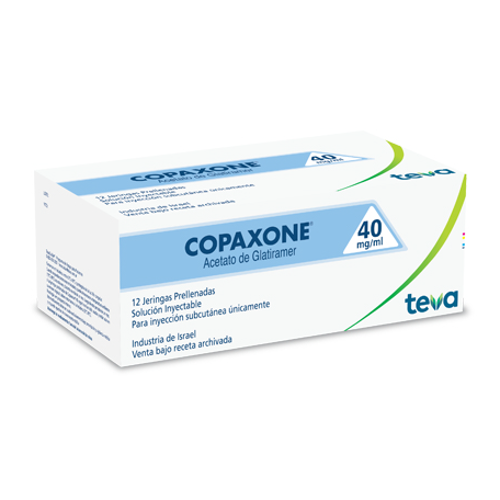
In the late 1960s and 1970s, Weizmann Institute scientists Michael Sela, Ruth Arnon and Dvora Teitelbaum made synthetic chains of four amino acids meant to mimic myelin basic protein, part of the nerve sheath attacked in multiple sclerosis. Instead of inducing the disease in laboratory animals, one of them, "Copolymer 1", suppressed it. Teva Pharmaceutical Industries licensed the compound in 1987 and developed it as glatiramer acetate, and in 1996 the US FDA approved it as Copaxone for relapsing-remitting multiple sclerosis.
Copaxone became one of the world's best-selling MS treatments, with annual sales above $4 billion at its peak, and for years it was Teva's most profitable product and the most commercially successful drug to come out of Israeli research. It showed how basic science at an Israeli institute could become a medicine used by hundreds of thousands of patients, and it helped build the country's biotechnology and pharmaceutical industries.
- Hebrew year
- 5756 (ה׳תשנ״ו)
- Place
- Rehovot
- Category
- Science & innovation
- Part of
- State of Israel
At the same time
 Shimon Peres1995 – 1996
 Benjamin Netanyahu1996 – 1999
 President Ezer Weizman13 May 1993 – 13 Jul 2000
 Rabbi Ovadia Yosef1920 – 2013