Jaddua (High Priest)
−350 – −323
Hebrew years: 3411–3438 (ג׳תי״א–ג׳תל״ח)
Open on the interactive timeline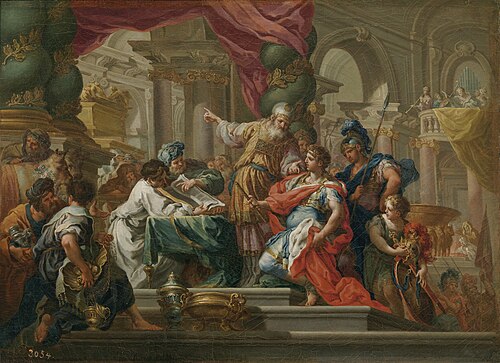
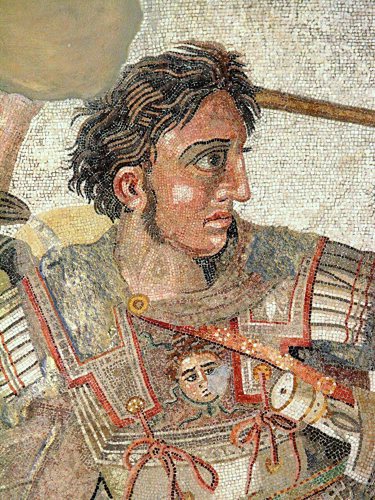
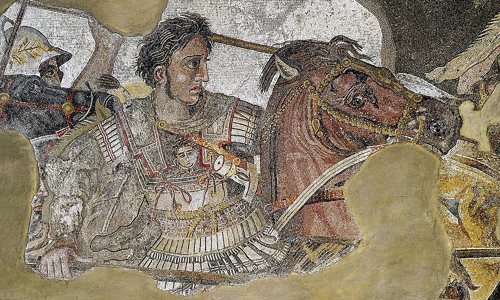
Jaddua (Yaddua), son of Johanan, is the last high priest named in the Hebrew Bible: Nehemiah 12:11 and 12:22 close the line of priests that began with Joshua son of Jehozadak after the return from Babylon. Josephus (Antiquities, book 11) makes him high priest when Alexander the Great swept down the coast in −332. In his account Jaddua, reassured in a dream, went out to meet the conqueror in his priestly robes, with the priests in linen and the people in white. Alexander bowed before the Divine Name on the high priest's golden plate, said he had seen this very figure in a dream in Macedonia, offered sacrifice at the Temple, and let the Jews live by their ancestral laws, with no tribute in the seventh year.
The Talmud (Yoma 69a) tells the same meeting of the high priest Shimon HaTzadik, places it at Antipatris and makes its day, the 25th of Tevet, a festival. Historians doubt the meeting, but both versions keep the memory of the passage from Persian to Greek rule with the Temple spared. Josephus says Jaddua died soon after Alexander and was followed by his son Onias I.
- Hebrew years
- 3411–3438 (ג׳תי״א–ג׳תל״ח)
- Place
- Jerusalem
- Category
- High Priests
- Part of
- Persian Period
Read the text
- Nehemiah 12:11 · Hebrew and English on Sefaria
- Nehemiah 12:22 · Hebrew and English on Sefaria
- Yoma 69a · Hebrew and English on Sefaria