Judaea Capta Coins
71
Hebrew year: 3831 (ג׳תתל״א)
Open on the interactive timeline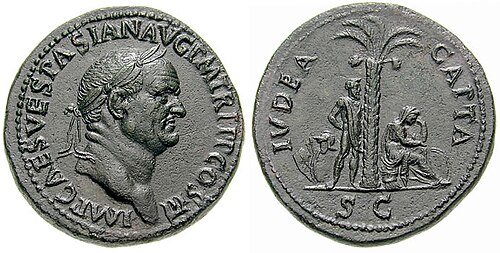
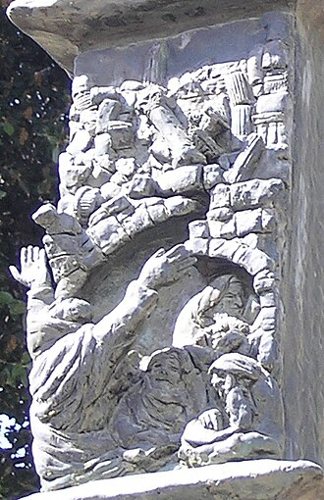
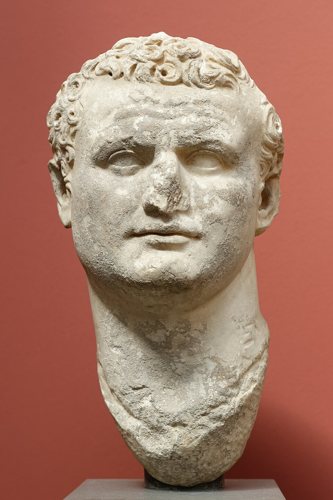
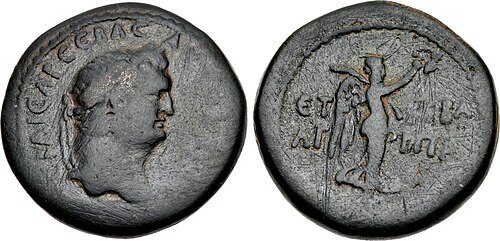
From 71, after the fall of Jerusalem, the emperor Vespasian and his son Titus struck coins all over the empire to celebrate the victory over the Jews. The best known, in gold, silver and bronze, read IVDAEA CAPTA, "Judea captured": a Jewish woman sits mourning beneath a palm tree, the symbol of the land, while a captive with hands bound or the emperor in armour stands beside her. Other types read IVDAEA DEVICTA, "Judea conquered", and the mint of Caesarea issued bronzes with the same message in Greek. They were struck for about 25 years, under Vespasian, Titus and Domitian.
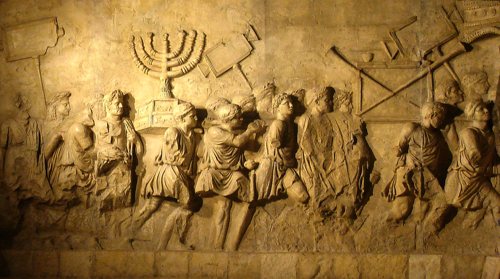
For Rome the coins were propaganda, like the Arch of Titus; for the Jews the woman under the palm recalled Lamentations 1:1, "How she sits alone". From then on every Jew of the empire paid the Fiscus Judaicus, the tax that replaced the Temple half-shekel. In 1958 the State of Israel answered them: its ten-lirot coin for the tenth year of independence was modelled on the Roman type, with the words "Israel Liberata".
- Hebrew year
- 3831 (ג׳תתל״א)
- Place
- Rome
- Category
- Archaeology
- Part of
- Roman Rule
Read the text
- Lamentations 1:1 · Hebrew and English on Sefaria
At the same time
 King Herod Agrippa II50 – 92
 Eleazar ben Yair35 – 73
 Flavius Josephus37 – 100
 Rabban Yochanan ben Zakkai30 – 90
 Rabbi Akiva50 – 135