Siege of Masada
73
Hebrew year: 3833 (ג׳תתל״ג)
Open on the interactive timeline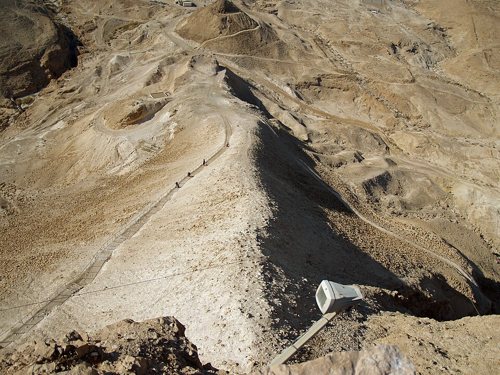
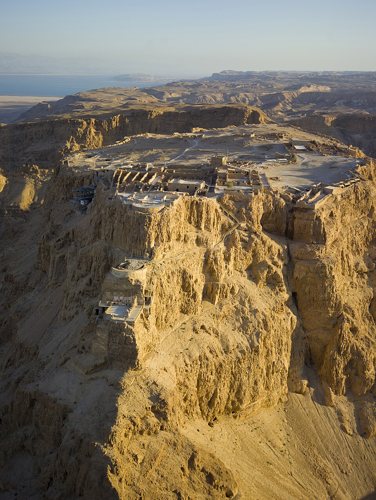
After Jerusalem fell, the last rebels held out at Masada, Herod's palace-fortress on a cliff above the Dead Sea, led by Eleazar ben Yair of the Sicarii. Around 73 the Roman governor Lucius Flavius Silva arrived with the Tenth Legion (Fretensis) and auxiliary troops, ringed the mountain with a siege wall and eight camps, and built a huge ramp up the western side. A battering ram breached the wall; the defenders raised an inner wall of timber and earth, which the Romans set on fire. According to Josephus (War 7.252–406), the defenders chose death over slavery that night: 960 died, and two women and five children who hid in the water conduits survived to tell the story.
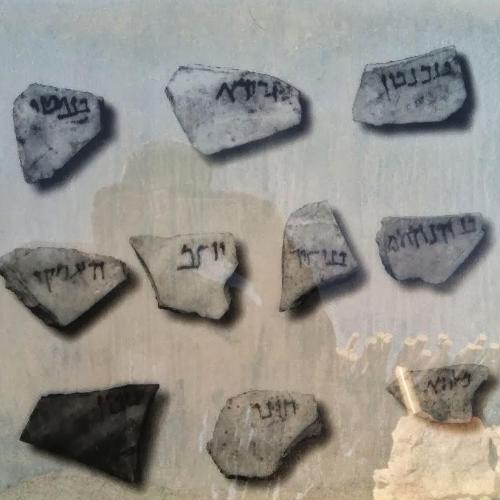
Josephus is the only written source, and parts of his account are debated. Yigael Yadin's excavations in 1963–1965 uncovered storerooms, a synagogue, ritual baths, scroll fragments including Ezekiel's vision of the dry bones, and the inscribed lots, while the Roman camps and ramp are still visible today. The line "Masada shall not fall again," from Yitzhak Lamdan's 1927 poem, became an Israeli national motto, and Masada was declared a UNESCO World Heritage Site in 2001.
- Hebrew year
- 3833 (ג׳תתל״ג)
- Place
- Masada
- Category
- Wars & battles
- Part of
- Roman Rule
At the same time
 King Herod Agrippa II50 – 92
 Eleazar ben Yair35 – 73
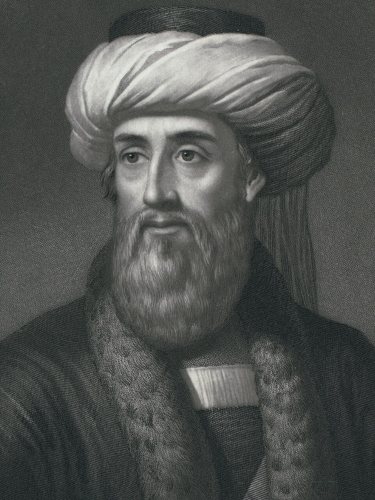 Flavius Josephus37 – 100
 Rabban Yochanan ben Zakkai30 – 90
 Rabbi Akiva50 – 135