LMLK seal
−700
Hebrew year: 3061 (ג׳ס״א)
Open on the interactive timeline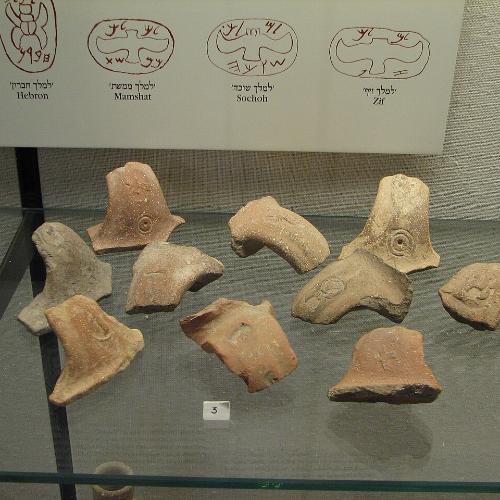
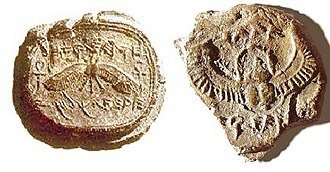
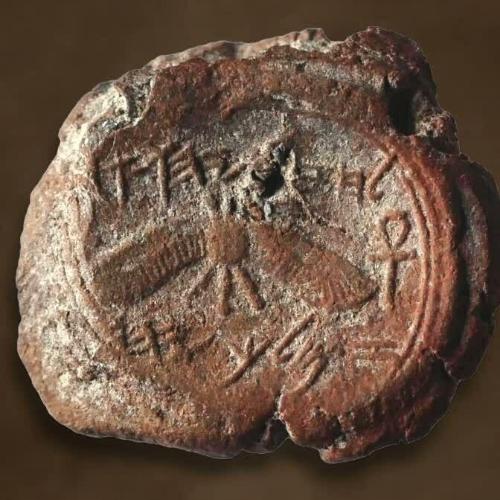
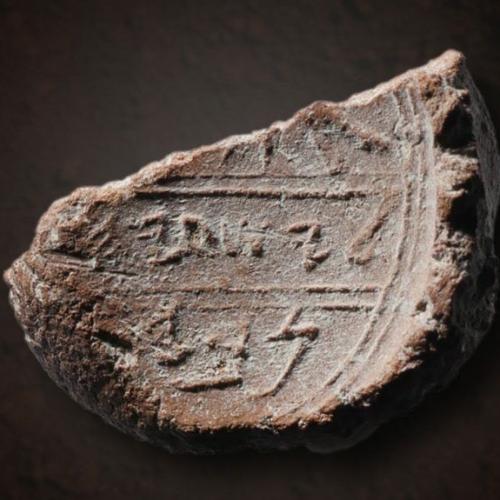
LMLK jars were large storage jars whose handles were stamped before firing with the Hebrew word lmlk, "belonging to the king," a royal emblem (a four-winged scarab or a two-winged sun disk) and usually one of four place names: Hebron, Ziph, Socoh, or MMST, a site still unidentified. More than 2,000 stamped handles are known, from Lachish, Jerusalem, Ramat Rahel, Gibeon and dozens of other sites in Judah, and many of the same jars also carry the private seal impressions of officials.
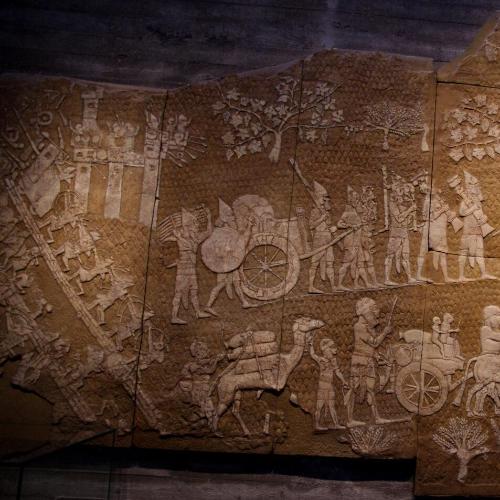
At Lachish, David Ussishkin's excavations found whole LMLK jars in the destruction layer of Sennacherib's conquest of −701, fixing their date to the reign of Hezekiah. They are widely read as part of Hezekiah's preparations for the Assyrian invasion, when, according to 2 Chronicles 32, he fortified his cities and built "storehouses for the yield of grain, new wine and oil." Their uniform design across the kingdom is some of the clearest evidence for an organized royal administration in Judah on the eve of Sennacherib's campaign.
- Hebrew year
- 3061 (ג׳ס״א)
- Place
- Lachish
- Category
- Archaeology
- Part of
- Israel & Judah