Quasicrystals (Dan Shechtman)
8 Apr 1982
Hebrew year: 5742 (ה׳תשמ״ב)
Open on the interactive timeline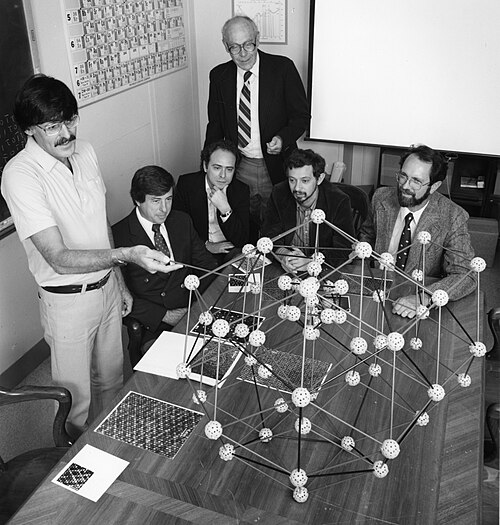
On 8 April 1982, at the U.S. National Bureau of Standards near Washington, where he was on sabbatical from the Technion in Haifa, Dan Shechtman looked through an electron microscope at a rapidly cooled alloy of aluminium and manganese and saw what every textbook said could not exist: a diffraction pattern with tenfold symmetry. Crystals were held to be built of units repeating in a regular pattern, which allows only two-, three-, four- and sixfold symmetry. Shechtman's atoms were ordered but never repeated, like the patterns of Islamic mosaics or a Penrose tiling. His group leader told him to go back and read the textbook, and then asked him to leave the group.
His paper, written with Ilan Blech, Denis Gratias and John Cahn, appeared in 1984 and was attacked for years, above all by Linus Pauling, who said there were no quasicrystals, only quasi-scientists. Laboratories around the world confirmed it, in 1992 the International Union of Crystallography changed the very definition of a crystal, and in 2011 Shechtman received the Nobel Prize in Chemistry alone. Born in Tel Aviv in 1941, he has taught at the Technion since 1975.
- Hebrew year
- 5742 (ה׳תשמ״ב)
- Place
- Haifa
- Category
- Science & innovation
- Part of
- State of Israel
At the same time
 Menachem Begin1977 – 1983
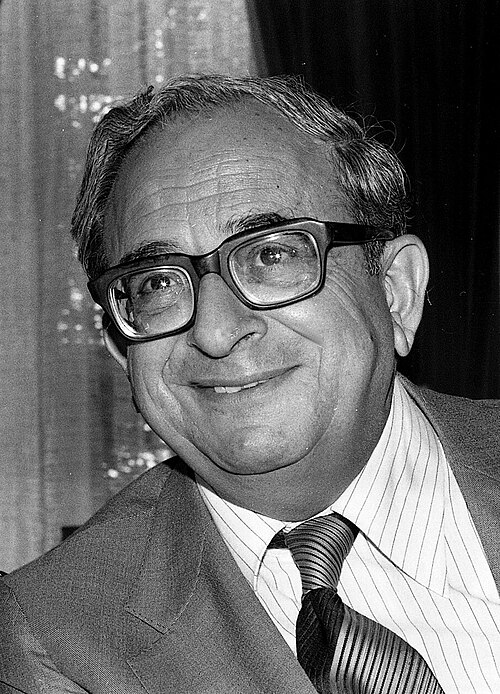 President Yitzhak Navon29 May 1978 – 5 May 1983
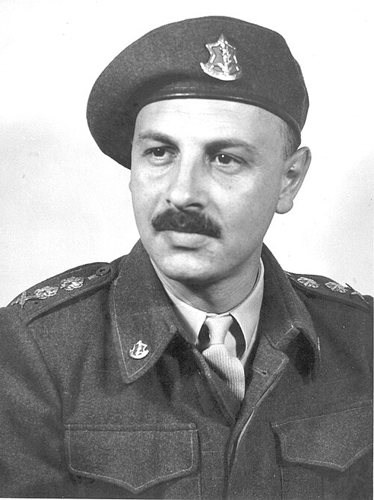 Yigael Yadin1917 – 1984
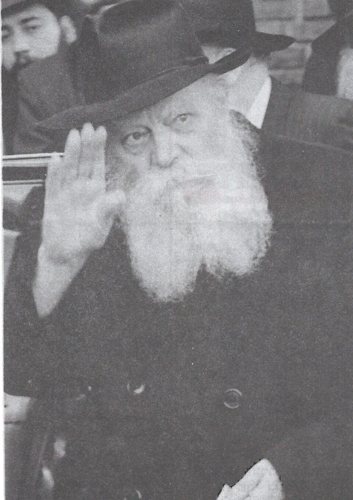 Rabbi Menachem Mendel Schneerson1902 – 1994
 Rabbi Joseph B. Soloveitchik1903 – 1993
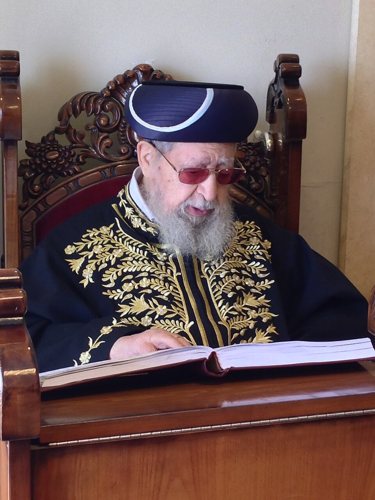 Rabbi Ovadia Yosef1920 – 2013