Great Revolt Coins
67
Hebrew year: 3827 (ג׳תתכ״ז)
Open on the interactive timeline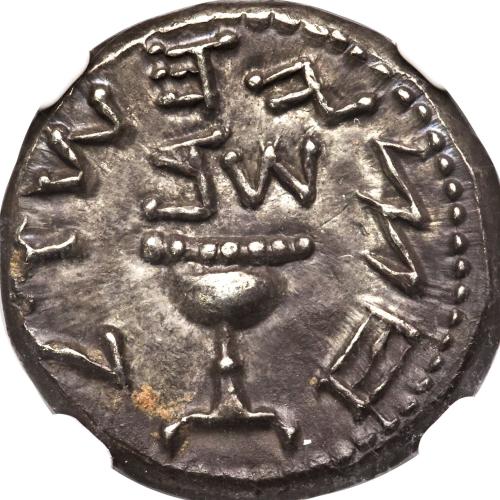
From 66 to 70 the rebel government in Jerusalem struck its own coins, dated by the year of the revolt. The silver shekels and half-shekels read "Shekel of Israel" and "Jerusalem the Holy" in the ancient paleo-Hebrew script, with a chalice on one side and a stem with three pomegranates on the other. Bronze coins of years two and three proclaim "For the Freedom of Zion" (Herut Tzion) with an amphora and a vine leaf, and those of year four "For the Redemption of Zion" with the lulav and etrog.
They were the first Jewish silver shekels, replacing the shekels of Tyre used for the Temple tax, and minting them was itself a declaration of independence. The deliberate use of the old Hebrew script, long out of daily use, tied the revolt to the kingdom of David and the First Temple. Israel's 10-shekel coin carries a palm tree and the words "For the Redemption of Zion" taken from a coin of the revolt.
- Hebrew year
- 3827 (ג׳תתכ״ז)
- Place
- Jerusalem
- Category
- Archaeology
- Part of
- Roman Rule
At the same time
 King Herod Agrippa II50 – 92
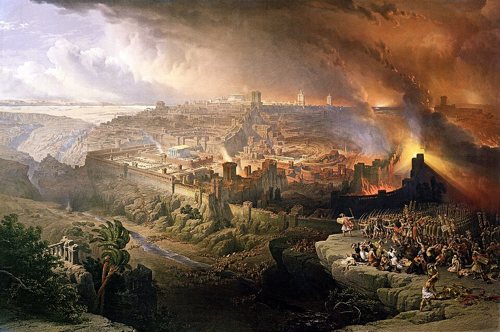 Eleazar ben Simon30 – 70
 John of Giscala30 – 70
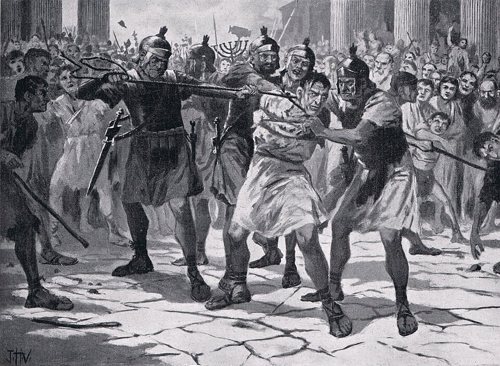 Simon bar Giora35 – 70
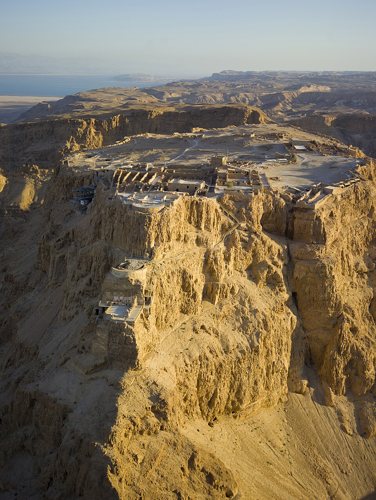 Eleazar ben Yair35 – 73
 Flavius Josephus37 – 100
 Rabban Yochanan ben Zakkai30 – 90
 Rabbi Akiva50 – 135