King Saul
−1050 – −1010
Hebrew years: 2882–2884 (ב׳תתפ״ב–ב׳תתפ״ד)
Open on the interactive timeline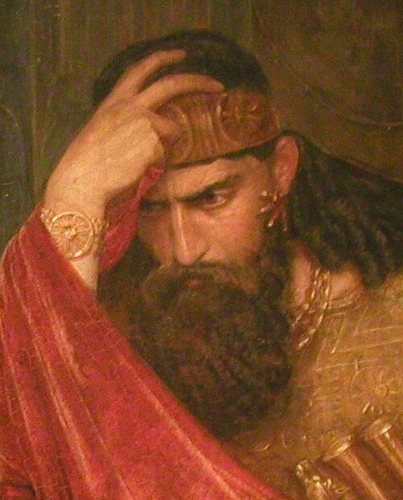
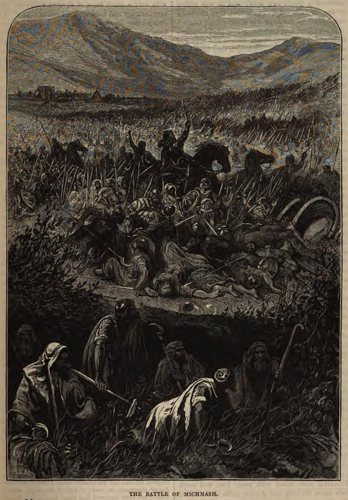
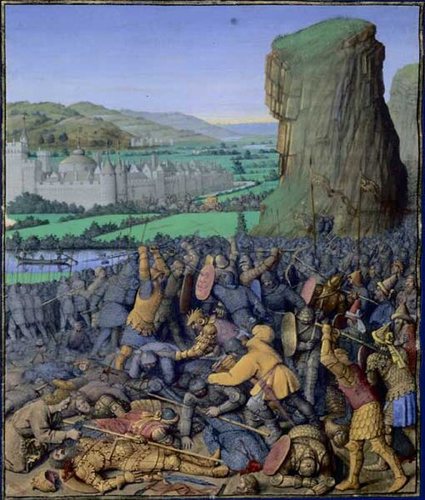
According to 1 Samuel, Saul son of Kish, a tall Benjaminite, went looking for his father's lost donkeys and was anointed by the prophet Samuel at Zuph, then chosen by lot at Mizpah. He proved himself by rescuing Jabesh-gilead from Nahash the Ammonite, who had threatened to gouge out the right eye of every man there, and his son Jonathan's daring raid on the Philistine garrison at Michmash sparked a great victory. But Saul offered a sacrifice at Gilgal without waiting for Samuel, and later spared Agag, king of Amalek, and the best livestock, prompting Samuel's rebuke "to obey is better than sacrifice" and the announcement that his kingdom would not endure (1 Samuel 13, 15). Tormented by an evil spirit and jealous of David ("Saul has slain his thousands, and David his tens of thousands"), he pursued him for years. On the eve of his last battle he consulted the medium of En-dor, then died on Mount Gilboa with three sons, including Jonathan.
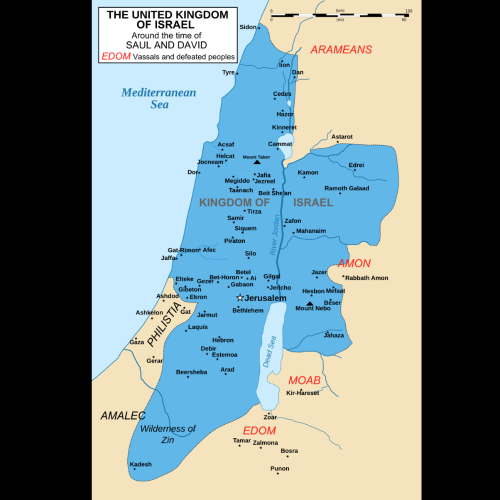
David's lament, "How the mighty have fallen!" (2 Samuel 1), is one of the Bible's great elegies. Saul's capital Gibeah is identified with Tell el-Ful north of Jerusalem, where W. F. Albright excavated a fortress he attributed to Saul in 1922.
- Hebrew years
- 2882–2884 (ב׳תתפ״ב–ב׳תתפ״ד)
- Place
- Gibeah
- Category
- United Monarchy
- Part of
- United Monarchy
Read the text
- 1 Samuel 9 · Hebrew and English on Sefaria
- 1 Samuel 31 · Hebrew and English on Sefaria
At the same time
 Prophet Samuel−1076 – −1010
 Ahijah / Ahimelech (High Priest)−1085 – −1012
 Prophetess Hannah−1120 – −1040
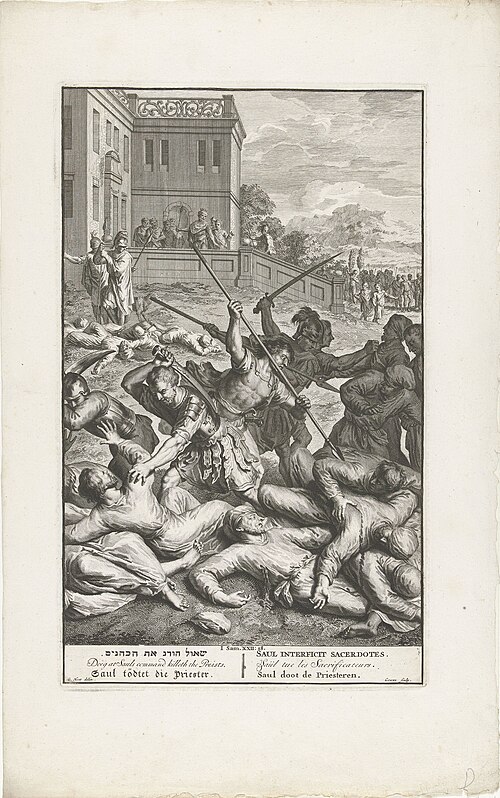 Abiathar (High Priest)−1012 – −969
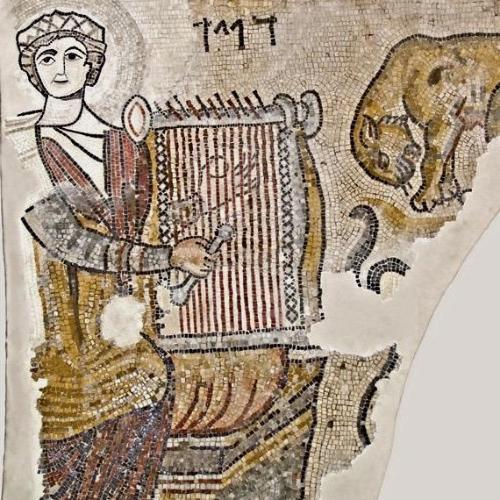 King David−1010 – −970
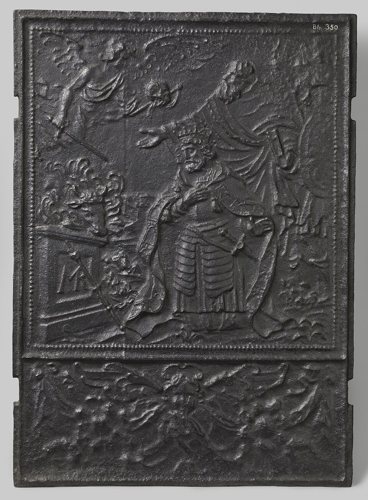 Prophet Gad−1010 – −970