Joseph
−1767 – −1657
Hebrew years: 2199–2309 (ב׳קצ״ט–ב׳ש״ט)
Open on the interactive timeline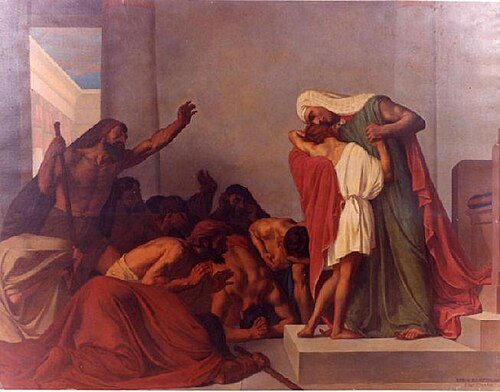
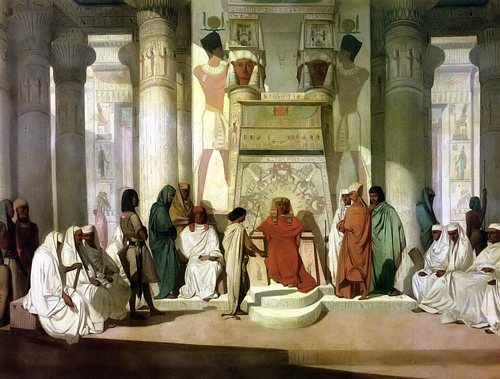
Genesis 37–50 tells that Joseph, Rachel's elder son and Jacob's favorite, received a coat of many colors (ketonet passim) and dreamed of sheaves and stars bowing to him. His jealous brothers sold him at Dothan to traders for twenty pieces of silver. In Egypt he served in Potiphar's house, was jailed on the false charge of Potiphar's wife, and interpreted the dreams of Pharaoh's cupbearer and baker. Called before Pharaoh, he read the seven fat and seven lean cows as seven years of plenty followed by seven of famine, and at 30 was made ruler over Egypt, named Zaphenath-paneah and married to Asenath, daughter of the priest of On. When his brothers came to buy grain he tested them with Benjamin and a silver goblet, then revealed himself after Judah's plea (Genesis 45) and settled the family in Goshen.
He died at 110 and made Israel swear to carry his bones out of Egypt; Moses took them at the Exodus and they were buried at Shechem (Joshua 24:32), where Joseph's Tomb is still venerated. His sons Ephraim and Manasseh became two tribes, and on Friday nights Jewish parents bless their sons, "May God make you like Ephraim and Manasseh." Tradition calls him Yosef HaTzaddik, Joseph the Righteous.
- Hebrew years
- 2199–2309 (ב׳קצ״ט–ב׳ש״ט)
- Place
- Avaris
- Category
- Patriarchs & Biblical Figures
- Part of
- The Patriarchs
Read the text
- Genesis 37 · Hebrew and English on Sefaria
- Genesis 45 · Hebrew and English on Sefaria
At the same time
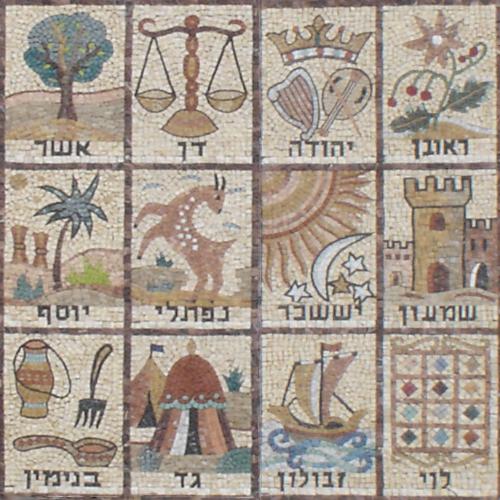 12 Tribes of Israel−1785 – −1657
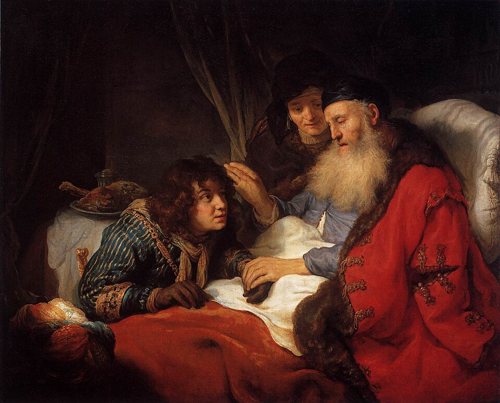 Jacob (Israel)−1858 – −1711
 Leah−1800 – −1730
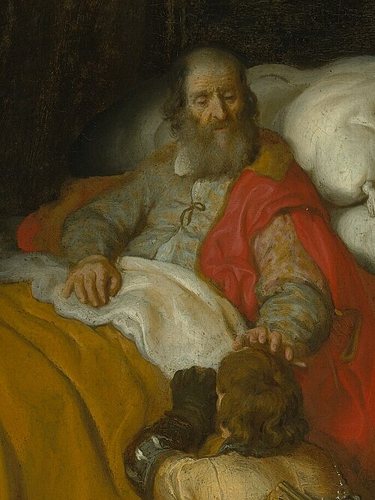 Isaac−1918 – −1738
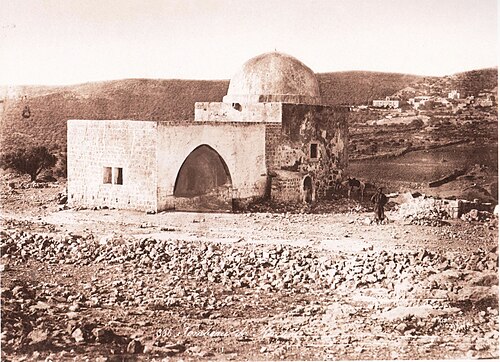 Rachel−1800 – −1751
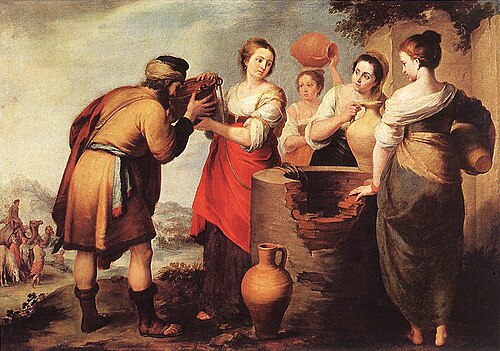 Rebecca−1881 – −1761