Fall of Judah (Babylon)
−586
Hebrew year: 3338 (ג׳של״ח)
Open on the interactive timeline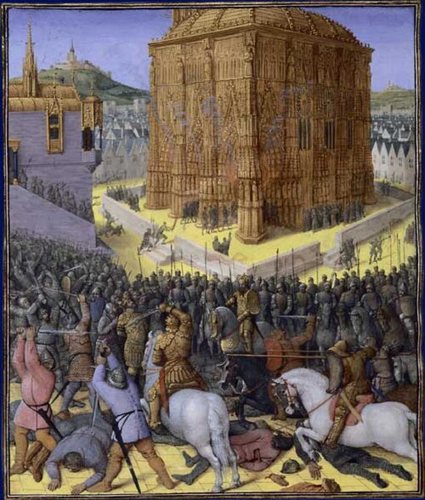
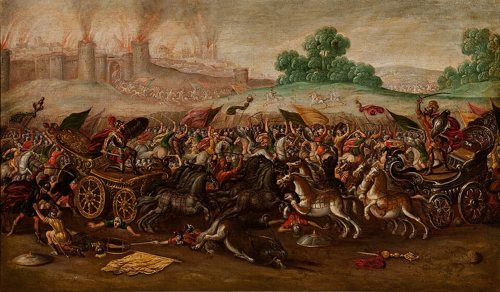
The Kingdom of Judah survived more than a century after Israel’s fall, but eventually came under Babylonian domination. After Babylon defeated Egypt, Judah became a vassal state, but its final kings repeatedly rebelled despite warnings from the prophet Jeremiah to submit to Babylon. The last king, Zedekiah, rebelled and sought help from Egypt, leading Nebuchadnezzar to besiege Jerusalem. Judah’s fall marked the end of the independent Davidic monarchy and the beginning of the Babylonian exile. Spiritually, the prophets described this disaster as the result of idolatry, injustice, and refusal to listen to God’s warnings.
- Hebrew year
- 3338 (ג׳של״ח)
- Place
- Jerusalem
- Category
- Major events
- Part of
- Babylonian Exile
Read the text
- 2 Kings 25 · Hebrew and English on Sefaria
At the same time
 King Zedekiah (Judah)−597 – −586
 Prophet Jeremiah (Judah)−627 – −586
 Baruch ben Neriah−605 – −570
 Book of Daniel (Exile)−605 – −503
 Prophet Ezekiel (Exile)−593 – −570
 Prophet Obadiah (Judah)−590 – −570
- Governor Gedaliah−586 – −582