Herodotus
−450 · until −425
Hebrew year: 3311 (ג׳שי״א)
Open on the interactive timeline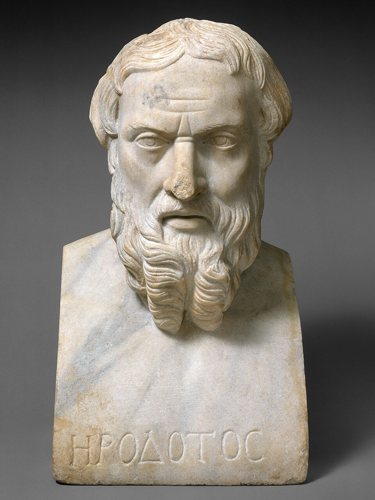
Writing around −450, while the Levant was under Persian rule, the Greek historian Herodotus describes the lands between Phoenicia and Egypt. For this coastal region he uses the Greek geographic name Palaistinê, generally traced to the Philistines who had once lived there, and he speaks of the "Syrians of Palaistinê" (Histories 2.104, 3.91, 7.89). He never identifies a state or a distinct people by that name, nor does he use it for the Jewish population. His terminology is loose and sometimes inconsistent: in one passage (7.89) he stretches Palaistinê to cover the whole coast from Phoenicia down to Egypt.
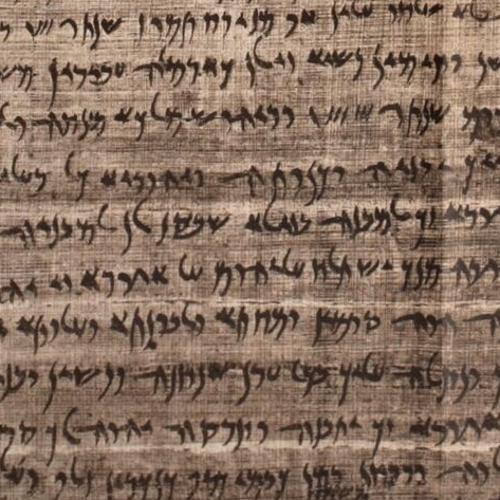
At the same time, independent evidence (the books of Ezra and Nehemiah, the Elephantine papyri and the Yehud coins) identifies the Jewish homeland around Jerusalem as Yehud, the Persian province descended from the Kingdom of Judah. Herodotus does not explicitly mention Yehud/Judea, Jerusalem, Israel or the Jews, despite writing in the same Persian period; centuries later Josephus (Against Apion 1.168–171) argued that the circumcised "Syrians of Palaistinê" of 2.104 must have been the Jews. His account is therefore valuable evidence for how a Greek author named the coast, but not evidence that Judea had been renamed or that another political entity had replaced it. The official Roman name Syria Palaestina appeared only centuries later, imposed by Hadrian on the province of Judea after he crushed the Bar Kokhba revolt (132–135).
- Hebrew year
- 3311 (ג׳שי״א)
- Place
- Halicarnassus
- Category
- Major events
- Part of
- Persian Period
At the same time
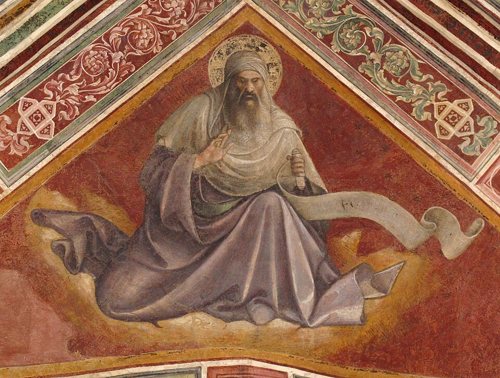 Prophet Malachi (Return Era)−450 – −430
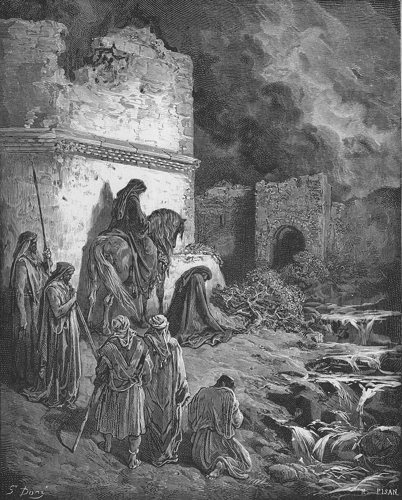 Governor Nehemiah−445 – −430
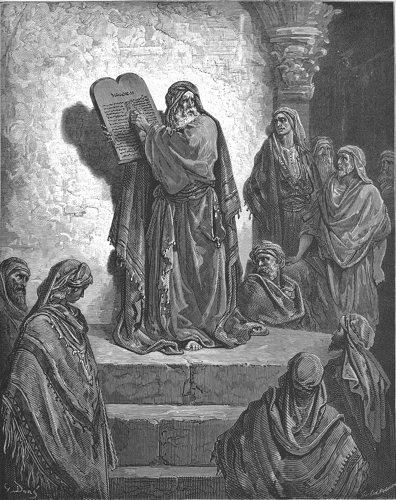 Ezra (Priest & Scribe)−458 – −440